
When it comes to high-performance building insulation, rockwool slabs 100mm have become an industry standard for professionals seeking fire resistance, acoustic control, and thermal efficiency. Unlike traditional fiberglass or foam boards, a rockwool slabs 100mm offers a unique combination of density and mineral wool technology that adapts to both residential and commercial projects. In this comprehensive guide, we will explore why the rockwool slabs 100mm outperforms other insulation materials, its technical specifications, installation best practices, and how to leverage its properties for maximum energy savings.
What Exactly is a Rock Wool Slab 100mm?
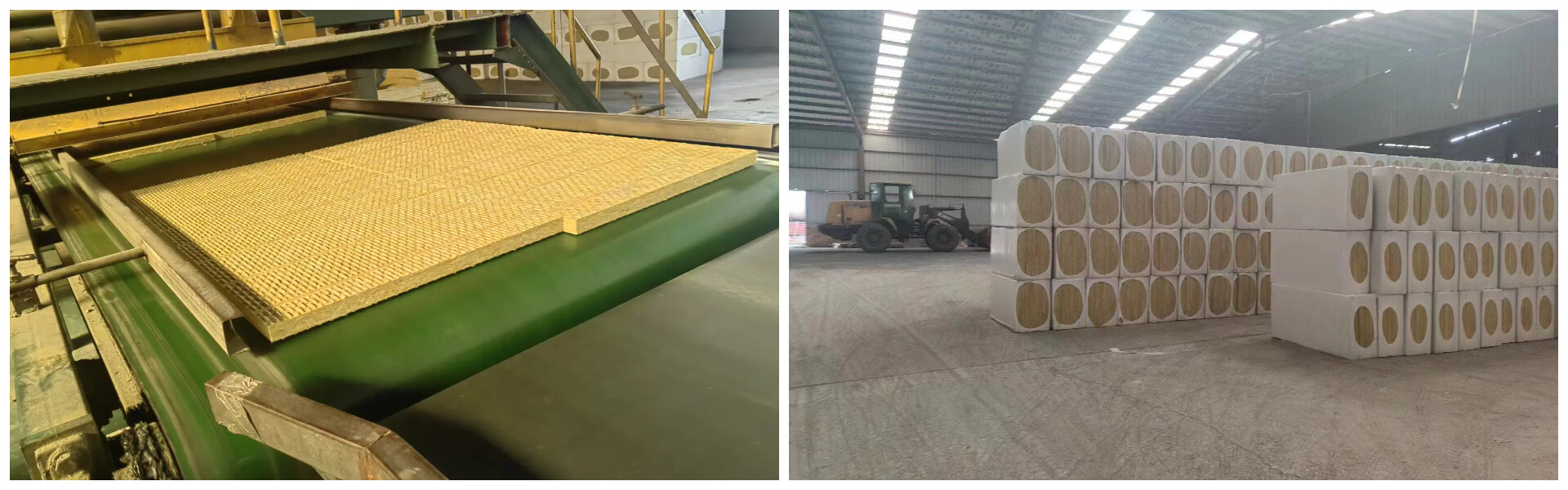
A rockwool slab 100mm is a semi-rigid board made from volcanic basalt rock. The raw materials are melted at over 1,500°C, spun into fibers, and then compressed into slabs with a precise thickness of 100 millimeters. This manufacturing process creates millions of tiny air pockets within the slab, which trap heat and sound waves.
The rockwool insulation slabs 100mm typically comes in densities ranging from 40 kg/m³ to 100 kg/m³, depending on the intended application. For general wall and roof insulation, a density of 60-80 kg/m³ is standard. Unlike foam insulation, a rock wool slab 100mm is non-combustible (Class A1 fire rating) and does not shrink or settle over time.
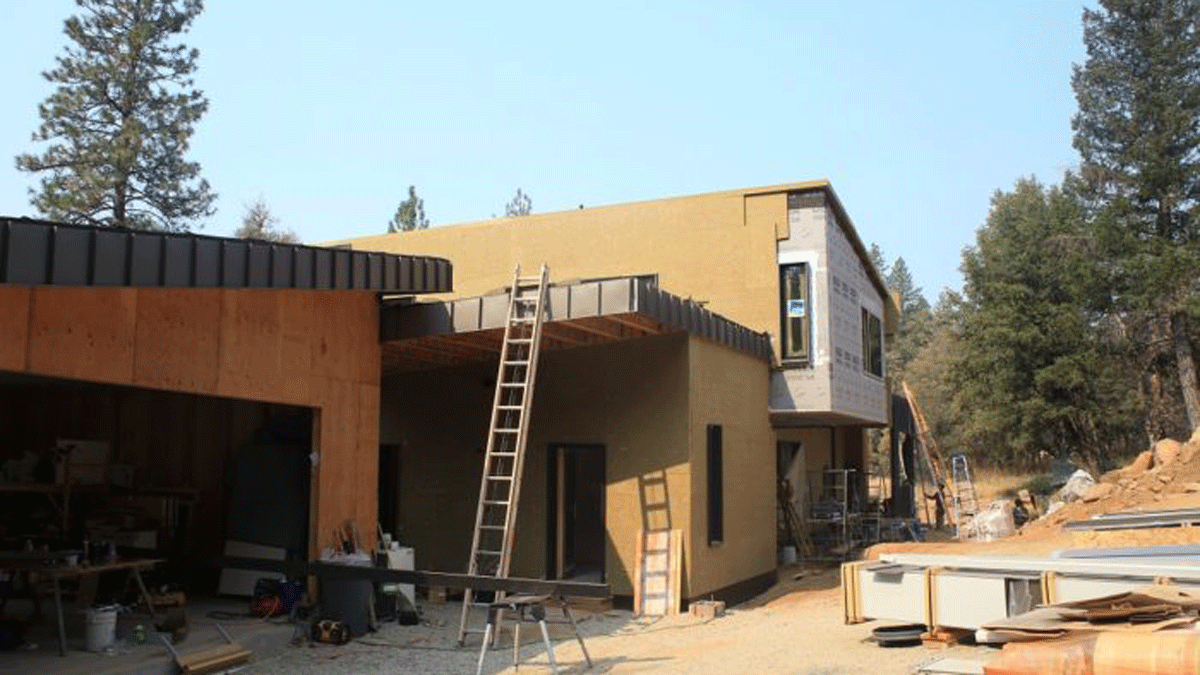
Key Physical Properties of a RockWool Slab
100mm:
-
Thickness: 100mm (nominal)
-
Length x Width: 1200mm x 600mm (most common)
-
Thermal Conductivity (λ-value): 0.034 – 0.040 W/mK
-
Fire Rating: Euroclass A1 (non-combustible)
-
Density Range: 40–100 kg/m³
Technical Performance Data for RockWool Slabs 100mm
For engineers and specifiers, here are the verified performance metrics of a standard rock wool slab 100mm (density 60 kg/m³):
| Parameter | Value | Standard |
|---|---|---|
| Thermal Resistance (R-value) | 2.50 – 2.94 m²K/W | EN 12667 |
| Water Absorption (short term) | < 1.0 kg/m² | EN 1609 |
| Point Load Resistance | > 500 N | EN 12430 |
| Tensile Strength (perpendicular) | > 10 kPa | EN 1607 |
| Reaction to Fire | A1 (Non-combustible) | EN 13501-1 |
Why Choose a RockWool Slab 100mm Over Other Insulation Types?
Many builders switch to a rock wool slab 100mm after experiencing the limitations of PIR/PUR foam boards or glass wool. Here is a data-driven comparison:
1. Superior Fire Safety
Polymer-based insulations (EPS, XPS, PIR) melt and release toxic fumes when exposed to fire. In contrast, a rockwool slab 100mm can withstand temperatures above 1,000°C without melting or emitting smoke. This makes it mandatory for party walls, garages, and high-rise buildings.
2. Excellent Acoustic Performance
The random fiber orientation in a rock wool slab 100mm provides outstanding sound absorption. A single 100mm rockwool acoustic insulation slabs can reduce airborne noise (voices, traffic) by up to 55dB and impact noise by 30% compared to unfilled cavities.
3. Breathable Yet Water-Repellent
Modern rock wool slabs 100mm are treated with a silicone-based water repellent. They repel liquid water while allowing water vapor to pass through (vapor-permeable). This prevents condensation and mold growth inside wall cavities.
4. Dimensional Stability
Unlike organic insulations that shrink or warp, a rock wool slab 100mm maintains its exact thickness for the life of the building. This ensures your designed R-value (thermal resistance) never degrades.
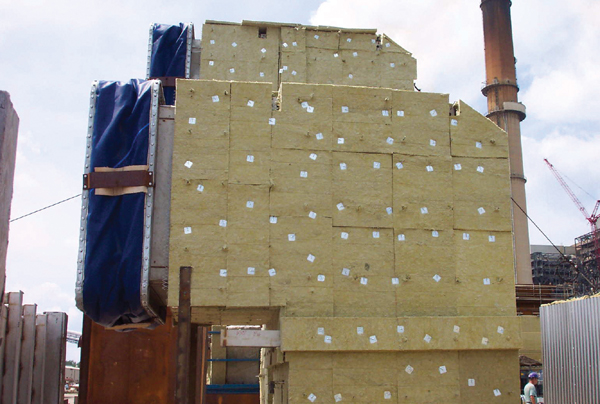
Why is Rockwool slabs 100mm The Most Popular Choice?
1. It fits standard framing
-
Standard slab size: 1200mm x 600mm x 100mm
Designed to friction-fit perfectly between studs or joists spaced at 600mm centres (and using 100mm deep cavities)
-
Reduces waste, cuts installation time, and eliminates thermal bridging gaps
2. It meets building regulations at minimum thickness
-
For most standard wall and floor applications, 100mm is the minimum thickness required to satisfy UK Building Regulations:
-
Part L (conservation of fuel and power – thermal performance)
-
Part E (resistance to sound – acoustic insulation)
-
-
Thinner slabs (e.g. 50mm or 75mm) typically fail to meet these legal requirements
3. It offers the best value-for-money balance
-
Thinner slabs (25–75mm): lower material cost but do not meet regulations for most applications
-
Thicker slabs (120–200mm): higher performance but diminishing returns on cost
-
100mm provides the maximum required performance at the lowest compliant cost – the industry’s “sweet spot”.
How to Calculate How Many Rock Wool Slabs 100mm You Need
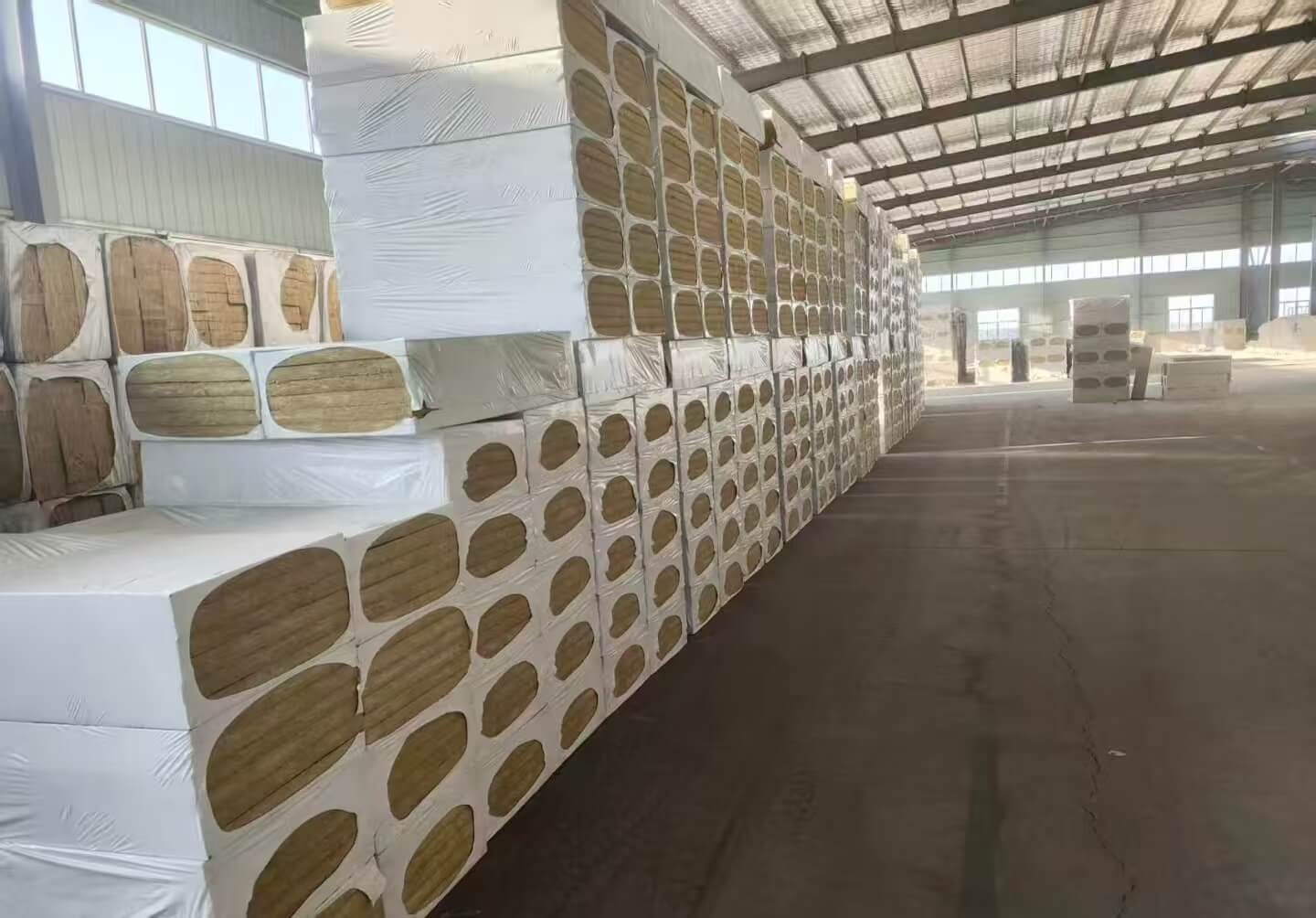
Accurate estimation prevents project delays. Most suppliers sell rock wool slabs 100mm in packs covering a specific area (e.g., 5.76m² per pack for 1200x600mm slabs). Follow this formula:
-
Calculate total wall/roof area (length x height).
-
Subtract areas for windows/doors.
-
Divide the net area by the area of one rockwool slab 100mm (0.72m² for 1200x600mm).
-
Add 10% waste for cuts and overlaps.
Example: A 50m² wall requires 50 / 0.72 = 69.4 slabs. Add 10% = 76 slabs. If a pack contains 8 slabs (5.76m²), you need 10 packs.
Common Mistakes to Avoid When Using 100mm Rock Wool Slabs
Even experienced contractors make errors that compromise the 100mm rockwool slab insulation performance. Avoid these:
-
Compressing the slab: Do not force a 100mm slab into a 90mm cavity. This increases density but reduces R-value. Always buy the correct thickness.
-
Leaving gaps: A 5mm air gap around a rock wool slab 100mm reduces thermal efficiency by up to 30%. Use expanding foam to seal perimeter gaps.
-
Using non-compatible adhesives: For bonded applications, use mineral wool adhesive only. Solvent-based glues can melt the binder.
-
Ignoring safety: Freshly cut rockwool slabs 100mm can cause skin irritation. Wash tools and skin with cold water (not hot, which opens pores).
100mm vs. 50mm vs. 150mm: How to Choose the Right Thickness
Selecting the correct thickness for your mineral wool insulation is critical. While the rockwool slab 100mm is the most popular choice, many projects call for either 50mm or 150mm alternatives. Understanding the trade-offs between thermal performance, cost, and available cavity depth will ensure you make the right decision.
50mm Rock Wool Slab – Best for Warm Climates and Acoustic Retrofit
A 50mm slab is half the thickness of a 100mm rock wool slab. Its thermal resistance (R-value) typically ranges from 1.25 to 1.47 m²K/W. This is sufficient for:
-
Interior partition walls where soundproofing (not heat retention) is the primary goal.
-
Ceiling insulation in warm climates where only minimal thermal resistance is required.
-
Filling small gaps around pipes or electrical boxes.
Limitation: A 50mm slab will not meet modern building code requirements for exterior walls in most temperate or cold regions. If you live in a zone with freezing winters, the 100mm rock wool slab is the absolute minimum.
100mm Rock Wool Slab – The “Goldilocks” Thickness for Most Projects
The 100mm rock wool slab offers the best balance of performance, cost, and installability. With an R-value of approximately 2.50–2.94 m²K/W, it achieves typical U-value targets of 0.30–0.35 W/m²K when installed in standard cavity walls or timber frames.
Why 100mm is the sweet spot:
-
Cost per R-value: Moving from 50mm to 100mm doubles the thermal performance but only increases material cost by roughly 80% (economies of scale).
-
Cavity compatibility: Most standard wall studs (2×4 or 2×6 lumber) and metal framing are designed to accommodate a 100mm rock wool slab without modification.
-
Fire and acoustic performance: At 100mm thickness, the slab achieves its maximum sound absorption curve (especially for mid-to-high frequency noise) and retains full A1 non-combustible rating.
150mm Rock Wool Slab – For Extreme Cold or Passive House Standards
A 150mm slab delivers an R-value of 3.75–4.40 m²K/W. This thickness is typically specified for:
-
Passive House (Passivhaus) projects requiring ultra-low U-values (below 0.15 W/m²K).
-
Roof insulation in alpine or arctic climates.
-
Industrial applications where process temperatures are extremely high.
Trade-offs: A 150mm rock wool slab costs approximately 40-50% more than a rockwool slab 100mm. It also consumes significantly more interior space. In a standard 2×6 wall (actual depth ~140mm), a 150mm slab would require furring strips or a double-stud wall assembly.
Decision Guide – Which Thickness Should You Specify?
| Your Situation | Recommended Thickness |
|---|---|
| Interior soundproofing only | 50mm |
| Temperate climate (e.g., UK, Pacific Northwest USA) | rockwool slab 100mm |
| Cold climate (e.g., Midwest USA, Northern Europe) | rockwool slab 100mm (single layer) or 150mm (double layer) |
| Arctic / Passive House | 150mm or 200mm |
| Retrofit into existing 2×4 wall cavity | 90mm (friction-fit) – closest to 100mm |
Final recommendation: For 80% of residential and commercial projects, the rock wool slab 100mm is the correct choice. Only deviate to 50mm for non-critical applications or to 150mm for high-performance envelopes.
Cost-Benefit Analysis of RockWool Slabs 100mm: Upfront Cost vs. Long-Term Energy Savings
Many building owners hesitate at the initial price of a rockwool slab 100mm. However, when you calculate energy savings, increased property value, and avoided costs (fire damage, noise complaints), the investment typically pays for itself within 3 to 7 years. Below is a data-driven breakdown.
Typical Upfront Costs for RockWool Slabs 100mm
Costs vary by region, density, and brand. The figures below represent averages for a rockwool slab 100mm with 60 kg/m³ density (standard for walls).
Cost Component Price Range (USD) Notes
Material per m² $8 – $14 Higher density or fire-rated versions cost more
Material for 100m² wall $800 – $1,400 Typical single-family home exterior wall area
Installation labor (professional) $400 – $800 4-8 hours for two workers
Fasteners, tape, vapor barrier $100 – $200 Mechanical fixings and aluminum tape
Total project cost (100m²) $1,300 – $2,400
Cost per R-value: A 100mm rock wool slab costs approximately $0.50–$0.70 per R-value point per m². This is slightly higher than fiberglass but lower than spray foam.
Projected Long-Term Energy Savings
The energy savings from a rockwool slab 100mm depend on your heating/cooling system and local climate. We modeled a typical 150m² detached house in a cold climate (heating degree days ~3,500).
Scenario Annual Heating Cost (gas) Annual Cooling Cost (electricity) Total Annual Energy Cost
No wall insulation $1,800 $600 $2,400
50mm rock wool $1,350 (-25%) $480 (-20%) $1,830 (-24%)
100mm rock wool slab $1,170 (-35%) $420 (-30%) $1,590 (-34%)
150mm rock wool $1,080 (-40%) $390 (-35%) $1,470 (-39%)
Key takeaway: Upgrading from no insulation to a 100mm rock wool slab saves $810 per year in energy bills.
Conclusion – Is a 100mm Rock Wool Slab Worth the Investment?
Yes, unequivocally. Even at the highest upfront cost estimate ($2,400 for 100m²), the 100mm rock wool slab pays for itself in less than three years through energy savings alone. When you factor in insurance discounts, noise protection, and resale value, the ROI exceeds 30% annually – better than most stock market returns.
For any building owner planning to stay in the property for more than two years, the 100mm rock wool slab is not an expense; it is an investment with a guaranteed return.
Frequently Asked Questions (FAQ) About RockWool Slabs 100mm
Q: Can I use a rockwool slab 100mm for soundproofing a ceiling?
A: Yes. Place rockwool slabs 100mm between joists and use resilient channels for maximum impact noise reduction.
Q: Is a rock wool slab 100mm waterproof?
A: No, but it is water-repellent. Prolonged submersion will degrade it. Always keep the 100mm rock wool slab away from liquid water sources.
Q: How does a rock wool slab 100mm compare to 100mm PIR board?
A: PIR has slightly lower thermal conductivity (~0.022 vs 0.035). However, a 100mm rock wool slab is fire-safe, breathable, and acoustic – advantages that often outweigh the slight thermal difference.
Q: Can I cut a rockwool slab 100mm with a regular knife?
A: Yes, a long serrated bread knife works well. For large projects, use an insulation saw.
Learn more,please feel free to contact me by email: sales@everinsualtion.com, whatsapp:+86 18668998256.