
Ceramic Fiber Products
What is Ceramic Wool? A Complete Guide to Its Forms, Uses, Benefits & Applications
Ceramic wool, also known as refractory ceramic fiber (RCF) or alumina-silica wool, is a high-temperature insulation material made from melted alumina and silica, often blended with other metal oxides. The raw materials are heated to over 2,000°C and then spun or blown into fine, fibrous strands. This process creates a lightweight, highly porous structure that gives ceramic wool exceptional thermal resistance. Unlike rock wool or glass wool, ceramic wool can withstand continuous exposure to extreme heat, making it the material of choice for high-temperature industrial applications.
Main Product Forms of Ceramic Wool
Ceramic wool is available in two primary product forms to suit different high-heat environments. Ceramic wool blanket is a flexible, needled blanket used for furnace linings, kiln doors, and boiler insulation. Ceramic wool pipe section (or pipe wrap) comes as flexible blankets or pre-formed wraps that wrap around high-temperature pipelines, exhaust systems, and industrial tubing for thermal protection. Both forms share the same exceptional heat resistance but vary in flexibility and installation method to match specific temperature requirements.
Key Uses and Application Scenarios of Ceramic Wool
Thanks to its ability to withstand temperatures up to 1,400°C or higher, ceramic wool is widely used in petrochemical, power generation, and metallurgical industries. In industrial furnaces and kilns, ceramic wool blankets serve as hot-face or backup linings to reduce heat loss and protect steel shells. On high-temperature pipelines carrying steam, hot gases, or molten materials, ceramic wool pipe sections wrap around pipes to prevent heat loss and protect nearby equipment. For boiler systems and exhaust stacks, ceramic wool blankets and pipe wraps work together to maintain thermal efficiency and improve workplace safety. These examples show how ceramic wool performs across high-temperature industrial, aerospace, and commercial heating applications.
Advantages of Ceramic Wool
Ceramic wool offers outstanding benefits: exceptional heat resistance (withstands over 1,400°C), extremely low thermal conductivity, excellent thermal shock resistance, and lightweight construction. Ceramic wool does not melt or degrade at high temperatures, resists chemical attack in most environments, and reduces energy costs by minimizing heat loss. For engineers and plant operators, ceramic wool provides reliable, long-lasting high-temperature insulation that improves safety and energy efficiency.
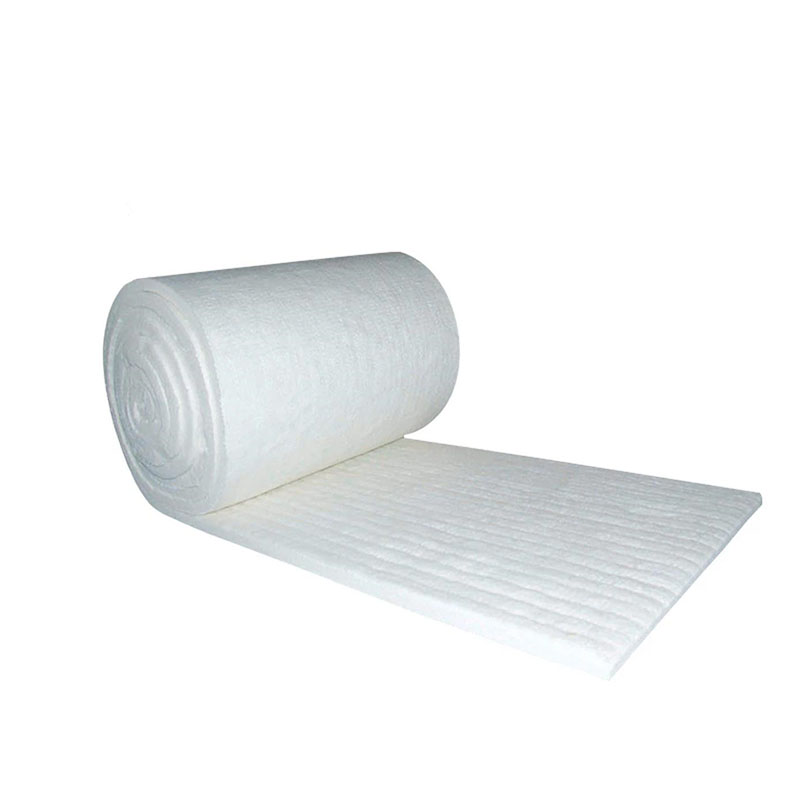
Ceramic Fiber Blanket
Ceramic Wool Product Category Description
This category covers a range of high-quality ceramic wool products (also known as refractory ceramic fiber, RCF), specifically designed for high-temperature insulation (up to 1430°C depending on grade), thermal shock resistance, and fire protection in industrial and limited construction applications.
The specific products and their typical applications are as follows:
-
Ceramic Wool Blanket
– Mechanically needled, with low thermal conductivity and moderate flexibility for wrapping around pipes, boilers, and furnace shells. Suitable for backup insulation of industrial furnaces, kiln linings, expansion joints, and high-temperature gaskets. It is easy to cut with a sharp knife and install on both flat and slightly curved surfaces.
– In construction: used as firestop insulation in chimneys, flues, and cable fire barriers – not for routine building wall insulation. -
Ceramic Wool Module
– Folded or stacked blanket with pre-installed anchors for rapid installation on furnace roofs and walls. Provides excellent resistance to high-velocity gas erosion (up to 30 m/s) and low shrinkage (<3% at 1260°C). -
Ceramic Wool Paper & Board
– High dimensional stability and low shot content, ideal for electrical insulation in high-temperature ovens, induction furnaces, and separation layers in metal heat treatment.
All our ceramic wool products feature low heat storage, excellent thermal shock resistance, and chemical stability against most corrosives (except hydrofluoric acid, phosphoric acid, and strong alkalis). They provide reliable, long-life solutions for customers requiring continuous high-temperature insulation, furnace backup linings, and passive fire protection – not for wet or mechanically abrasive environments.