
Are you specifying insulation for a high-rise curtain wall or a hydroponic grow room? One material – Rockwool Stone wool – works for both, but for completely different density grades.
1. What Is Rockwool Stone Wool?
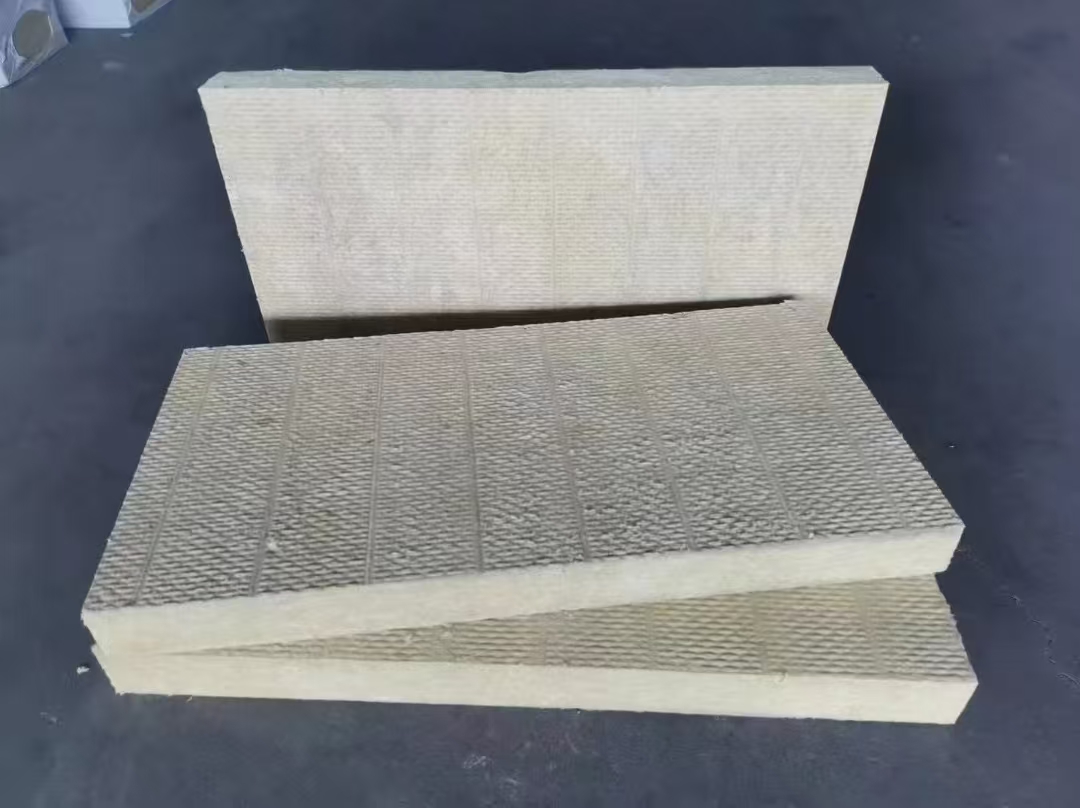
Rockwool stone wool is a man-made vitreous fiber derived from one of the most abundant volcanic rocks on earth: basalt. It is also called rock wool, a specific engineered stone fiber.
The Manufacturing Reality:
Raw basalt and dolomite are melted at 1,600°C (2,900°F) in a cupola furnace. The lava is then spun into fibers using a cascade of rotating wheels. A proprietary binder (typically <3% organic resin) is applied to form batts, boards, or loose fill.
2. What Is The Core Performance of Rockwool Stone Wool?
Because Rockwool stone wool is a single material (not a composite), its performance is entirely structural:
Fire (A1 Non-Combustible): The basalt fibers melt at 1,100°C, but they do not burn. In a fire, the binder evaporates, but the stone skeleton remains intact, acting as a physical barrier against flame spread. No dripping, no toxic off-gassing.
Hydrophobicity (Silicone Treatment): The fibers are coated with a trace silicone layer. Water beads off the surface, but water vapor molecules (smaller than liquid droplets) can still pass through. This prevents interstitial condensation inside wall cavities.
Acoustic (Random Incidence Absorption): Unlike foam, which acts as a membrane, stone wool has a complex pore structure. Sound waves enter the matrix, bounce off irregular fibers, and convert to heat via friction. Absorption coefficient (αw) reaches 0.95 at 100mm thickness.
Compression Resistance: At 150 kg/m³ density, Rockwool stone wool withstands 50+ kPa of pressure (enough for airport runways or heavy machinery foundations).
3. Application Scenarios of Rockwool Stone Wool
You choose Rockwool stone wool based on density (kg/m³) , not thickness.
| Density Range | Primary Application | Why This Density |
|---|---|---|
| 30–60 kg/m³ | Residential roof rafter rolls, pitched roofs | Lightweight enough for friction-fit between timber rafters. No mechanical fasteners needed. |
| 80–100 kg/m³ | Curtain wall façades, steel stud partition walls | Rigid enough to stand vertically in a 4-meter cavity without sagging or slumping over time. |
| 120–150 kg/m³ | Floating floors, acoustic underlay for screed, gymnasiums | High point-load resistance prevents compression under 50-75mm concrete screed. Also provides low-frequency impact noise reduction. |
| 180–200 kg/m³ | Industrial ovens, marine A60 fire doors, petrochemical plants | Zero shrinkage at 650°C continuous surface contact. Certified for A60 bulkhead and deck penetration seals. |
| 40–80 kg/m³ (special) | Hydroponic grow cubes | Wicks nutrient solution without rotting. Unlike organic coco coir, stone wool is sterile and does not degrade. |
4. Customer Selection Guide: How to Specify Correctly
Most buyers fail because they only look at R-value (thermal resistance) . Here is the technical workflow:
Step 1: Determine the Fire Class Required
Residential (low risk): Euroclass A2 (limited combustibility) is sufficient.
High-rise >18m / Schools / Hospitals: A1 non-combustible mandatory.
Step 2: Check the “Point Load” Rating
For floors or roof terraces, ask for kPa (kilopascal) compression. Standard stone wool (40 kPa) will compress under a potted plant. Rockwool industrial grades offer 150+ kPa.
step 3. Head-to-Head: Rockwool Stone Wool vs. Competitive Materials
vs. Polyurethane (PIR/PUR) Foam
Fire: Foam ignites at 250°C, releases black smoke. Stone wool does nothing.
Aging: Foam suffers “thermal drift” (R-value drops 15-20% over 10 years as blowing gas escapes). Stone wool R-value is permanent.
Moisture: Foam is a vapor barrier (can cause rot if leaks occur). Stone wool dries freely.
Winner: Stone wool for safety & durability. Foam only wins on pure thermal thickness (thin cavity).
vs. Fiberglass (Glass Wool)
Handling: Fiberglass splinters are sharp and respiratory irritants. Stone wool fibers are shorter and thicker (lower bio-persistence).
Sound: Fiberglass absorbs mid-high frequencies. Stone wool absorbs low bass (e.g., subwoofers, traffic rumble) due to higher density.
Fire: Fiberglass melts at 650°C into a glass puddle. Stone wool stays rigid.
Winner: Stone wool for acoustic & fire. Fiberglass only for budget attic floors.
vs. Polyester (PET) Batts
Mold: PET is organic (polymerized from starch). Mold feeds on it if wet. Stone wool is inorganic → zero mold food.
Rodents: Mice chew through PET for nesting. They cannot digest stone fibers.
Winner: Stone wool for moisture/mold/rodent; PET for installer comfort and zero resin.
6. Why Choose Rockwool Stone Wool Over Anything Else?
You should select Rockwool stone wool if your project meets any three of these criteria:
The building will stand for >30 years (permanent R-value, no sagging).
Occupants include children, elderly, or sleeping people (no toxic smoke risk).
Climate includes freeze-thaw cycles (stone wool drains; wet foam spalls concrete).
Noise sources include traffic, trains, or nightclubs (low-frequency absorption).
You cannot guarantee the building envelope will stay 100% dry (stone wool tolerates leaks).
When NOT to choose it:
If the cavity is <25mm thin (vacuum insulated panels perform better).
If weight is critical (e.g., aircraft interiors—aerogels are lighter).
If budget is the only driver (fiberglass is cheaper per R-value).
Final Verdict:
Rockwool stone wool is not the cheapest, lightest, or highest R-value per inch. But it is the most fault-tolerant insulation. It handles moisture, fire, and abuse better than any organic alternative. For critical infrastructure, marine environments, or any building where failure is not an option—there is no substitute.
Request Quote or Sample
What you get:
-
Density-verified samples (free for qualified projects)
-
Datasheet with actual test values (not generic)
-
Lead time: 5–10 working days for standard densities
-
Technical support: Our engineers review your spec before shipment