
In the world of construction and industrial insulation, few products offer the perfect balance of fire safety, thermal efficiency, acoustic comfort, and cost-effectiveness. The Rock Wool Insulation 50mm board has emerged as an industry standard — thick enough to deliver high performance, yet versatile enough for walls, roofs, HVAC systems, and industrial equipment. This article explores its technical superiority, real-world applications in Southeast Asia, and why it should be your first choice for non-combustible insulation.
1. Rock Wool Insulation 50mm Brief Introduction
1.1 What is 50mm Rock Wool Insulation?
Rock Wool Insulation 50mm is a semi-rigid, high-density panel made from natural volcanic rock (basalt) and recycled slag. The raw materials are melted at approximately 1,600°C, spun into fine fibers, and then compressed into a 50mm thick board using thermosetting resins. This 50mm thickness represents the optimal balance between thermal resistance, acoustic absorption, and ease of handling — making it the most commonly specified thickness for wall cavities, curtain walls, and HVAC ductwork across Southeast Asia’s rapidly growing construction market.
1.2 Raw Materials & Manufacturing Process
The production process begins with basalt rock — naturally abundant and sustainable. These materials are fed into a cupola furnace, melted at extreme temperatures, then centrifuged into fibrous strands. A small amount of binder is added before the fibers are collected, needled, and cured into rigid panels. The result is a uniformly dense, open-fiber structure that traps air, resists fire, and absorbs sound.
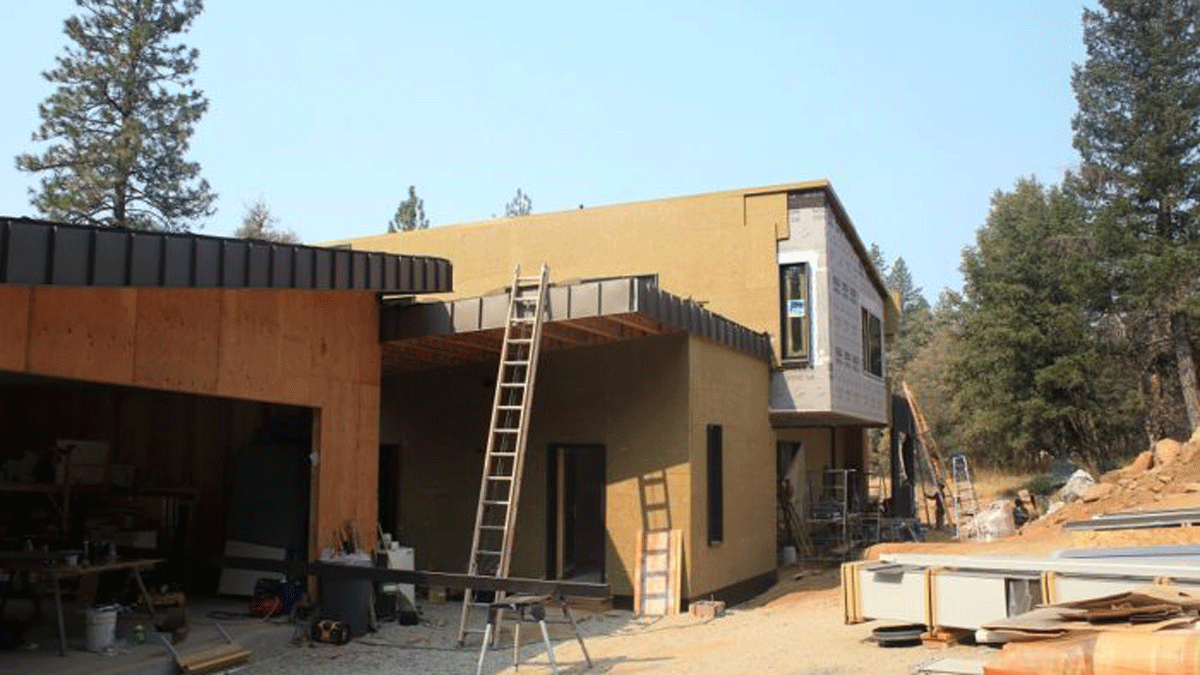
1.3 Basic Fiber Structure & Orientation
The fibers are randomly oriented during needling, creating a three-dimensional matrix. This structure is key to its performance: millions of tiny air pockets provide thermal resistance, while the tortuous path through fibers dissipates sound waves. Unlike foam boards, rock wool does not rely on trapped blowing agents — so its performance remains stable for decades even in tropical climates like Indonesia, Thailand, and Vietnam.
2. Key Performance Advantages
2.1 Fire Resistance (Class A1 Non-Combustible)
Rock wool is inherently non-combustible. It achieves Euroclass A1 rating — the highest possible — meaning it will not ignite, produce smoke, or contribute to flame spread even at temperatures exceeding 1,000°C. For high-rise buildings in dense Southeast Asian cities like Bangkok, Manila, and Jakarta, this fire barrier capability is critical for life safety and building code compliance.
2.2 Sound Insulation Performance
The dense fiber network makes rock wool an excellent sound absorber. It effectively blocks airborne noise — from traffic, neighbors, or office chatter. This makes it a popular choice for hotels, hospitals, schools, and multi-family residential buildings where noise control is essential.
2.3 Thermal Insulation Efficiency
With a thermal conductivity (λ-value) of 0.035–0.040 W/m·K, 50mm rock wool provides excellent thermal resistance — especially valuable in hot and humid Southeast Asian climates where air conditioning accounts for 50–60% of building energy use.
2.4 Water Repellency & Breathability
Modern rock wool boards are treated with a silicone-based water repellent. They repel liquid water while remaining vapor-permeable — critical for tropical climates with high humidity and frequent monsoon rains. This allows wall assemblies to dry out naturally and prevents mold or rot.
2.5 Non-Corrosive & Eco-Friendly
Rock wool is pH neutral, causing no corrosion to steel studs or pipes. It contains no CFCs, HCFCs, or formaldehyde, and is 100% recyclable — supporting green building certifications like LEED and Malaysia’s GBI (Green Building Index).
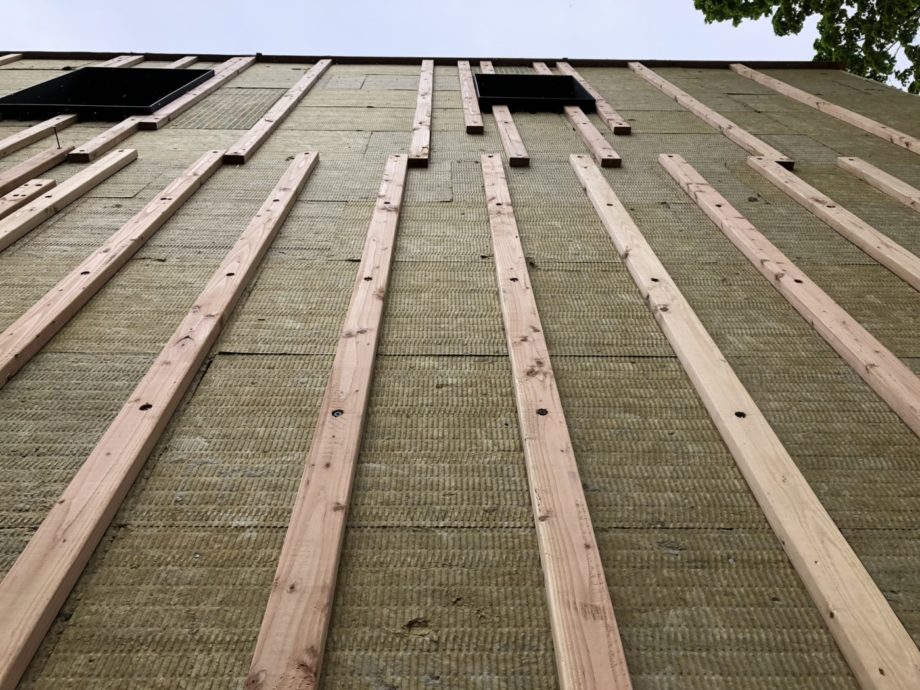
3. Technical Specifications
| Parameter | Value / Range |
|---|---|
| Thickness | 50 mm (±5%) |
| Density range | 40 – 120 kg/m³ (common: 60–80 kg/m³) |
| Standard board size | 600 × 1200 mm (custom sizes available) |
| Thermal conductivity (λ-value) | 0.035 – 0.040 W/m·K |
| Thermal resistance (Rsi, metric) | 1.25 – 1.43 m²·K/W |
| Thermal resistance (R-value, imperial) | Approx. R-1.0 – R-1.2 (hr·ft²·°F/Btu) |
| Working temperature (unfaced) | -50°C to +750°C |
| Melting point | > 1,100°C |
| Fire rating | Euroclass A1 (non-combustible) |
| Water repellency | ≥ 98% (after treatment) |
| Short-term water absorption | ≤ 0.5 kg/m² (partial immersion) |
| Vapor resistance (μ-value) | Approx. 1.0 – 1.5 (breathable) |
| Compressive strength | ≥ 40 kPa (at 10% deformation, for 80 kg/m³ density) |
| Tensile strength (perpendicular to face) | ≥ 10 kPa |
| Acoustic performance | Excellent sound absorption |
| Corrosion resistance | pH neutral – non-corrosive to steel |
| Binder type | Thermosetting resin (formaldehyde-free options available) |
| Recyclable | 100% |
| Certifications | ISO 9001, ISO 14001, CE (EN 13162) |
4. Application Areas / Building Types
4.1 Rock Wool for Building Walls (Curtain Walls & Cavity Walls)
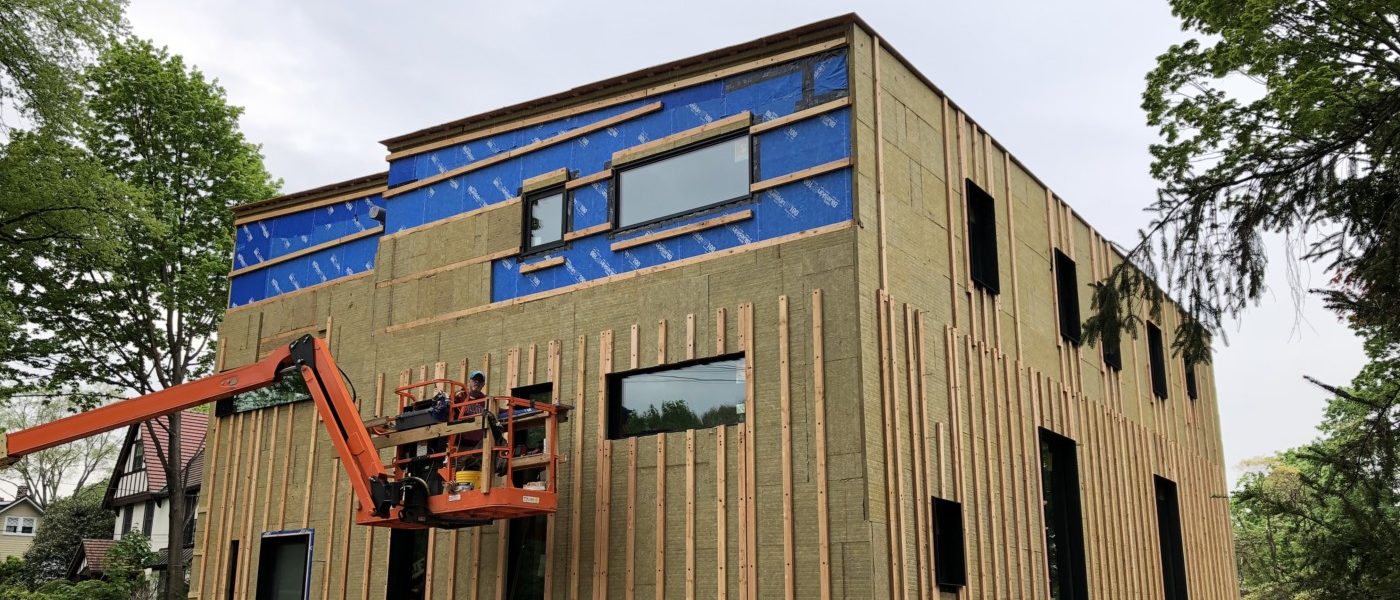
In modern curtain wall systems, 50mm rock wool provides both thermal break and firestopping — preventing flame spread up the building facade. In cavity walls, it friction-fits between brick and block, reducing heat loss by up to 40%.
4.2 Roof Insulation (Flat Roofs & Pitched Roofs)
For flat roofs with concrete or steel decks, 50mm rock wool boards offer compressive strength to support maintenance traffic while keeping interiors cool. In pitched roofs, they fit between rafters, providing summer heat protection and winter warmth.
4.3 HVAC Duct Systems (Thermal & Acoustic Lagging)
Heating and cooling ducts lose energy through metal walls — and transmit fan noise throughout a building. Wrapping ducts with 50mm rock wool (faced with aluminum foil) significantly reduces heat loss and cuts airborne noise.
Customer Case – HVAC Duct Insulation (Southeast Asia)
Project: 35-story office tower, Bangkok, Thailand
Challenge: The building’s central HVAC system ran through core shafts adjacent to executive offices. Uninsulated cold ducts caused two problems: (1) surface condensation dripping onto ceiling tiles during Thailand’s humid rainy season, and (2) fan noise transmitting through duct walls, exceeding 55 dB in quiet office areas. The original fiberglass wrap had compressed and lost effectiveness after three years.
Solution:Specified 50mm rock wool boards (density 70 kg/m³) with heavy-duty aluminum foil facing, overlapped and taped at all joints. Installed over 8,500 m² of supply and return air ducts across 35 floors.
Result:
– Condensation completely eliminated — no more ceiling tile stains or mold complaints
– Noise levels dropped from 55 dB to 44 dB — an 11 dB reduction, which is perceived by the human ear as approximately half as loud
– Estimated HVAC energy savings of approximately 18–22% annually
– The building achieved LEED Gold certification, with the rock wool installation contributing to Energy & Atmosphere credits
– Client feedback after 12 months: “No callbacks, no maintenance — we are specifying rock wool for our next two projects in Vietnam.”
4.4 Industrial Equipment (Pipes, Boilers, Storage Tanks)
Process equipment operating up to 750°C benefits from rock wool’s thermal stability. 50mm thickness is often used as the first layer in multi-layer systems for steam lines, heat exchangers, and furnace walls.
4.5 Marine & Offshore Partitions
Ships and oil platforms demand A-class fire-rated divisions. 50mm rock wool boards (density 100 kg/m³) are sandwiched between steel plates to create A-60 rated bulkheads — resisting fire for 60 minutes.
5. Installation Advantages & Considerations
5.1 Easy Cutting & Friction Fit Installation
Rock wool boards cut cleanly with a sharp knife or fine-tooth saw. For wall cavities, cut the board 5–10mm wider than the cavity space, then press it in — friction holds it securely without adhesives or mechanical fasteners in most cases.
5.2 Lightweight for Transport & Handling
A 50mm board measuring 600×1200mm at 60 kg/m³ weighs only about 2.2 kg per board. This reduces labor costs and speeds installation — especially valuable for high-rise projects in dense Southeast Asian cities where logistics efficiency matters.
5.3 Safety Precautions (PPE & Dust Control)
Rock wool fibers can cause temporary skin itching and respiratory irritation. Always wear: gloves, long sleeves, safety glasses, and an N95 mask. Use on-tool dust extraction or mist spray in confined spaces.
5.4 Moisture Protection During Storage & Installation
Although water-repellent, rock wool should not be left exposed to monsoon rains. Store on pallets under cover. If boards do get wet, they drain quickly and dry out without losing shape or performance — unlike fiberglass or cellulose.
5.5 Compatibility with Facings & Accessories
| Facing Type | Best For |
|---|---|
| Aluminum foil | HVAC ducts, radiant barriers |
| Black tissue | Visible interior applications |
| PVC / Polypropylene | Cleanrooms, food processing plants |
| Wire mesh | Industrial high-temperature (up to 750°C) |
Customer Case – Curtain Wall Fire Barrier (Southeast Asia)
Project: 42-story residential condominium, Jakarta, Indonesia
Challenge:Indonesia’s Ministry of Public Works updated fire safety regulations after several high-rise fires. The condominium’s original curtain wall design used PIR foam insulation between spandrel panels and slab edges — which failed the required 2-hour fire resistance test. The developer faced potential construction delays and fines.
Solution: Replaced all PIR foam with 50mm rock wool boards (density 80 kg/m³), friction-fitted into the curtain wall cavity at each floor slab edge. Installation was completed by a local crew of eight workers over 10 days, working floor by floor from bottom to top. The rock wool was faced with black tissue on the interior side for a clean finished appearance.
Result:
– Passed the 2-hour fire resistance test (integrity & insulation) per BS 476 Part 22 — a standard widely accepted for curtain wall applications in Indonesia
– Achieved fire compartmentation at every floor slab — preventing vertical flame spread
– No condensation issues after 8 months, despite Jakarta’s 85–95% average humidity
– Developer saved an estimated $120,000 in potential delay penalties
– The project received a Green Building rating from GBC Indonesia, with the rock wool contributing to fire safety and energy efficiency credits
– Client quote: “We initially hesitated to switch from PIR, but the fire test results and installation speed convinced us. Now rock wool is our standard spec for all new projects.”
6. Why Choose Our Factory?
6.1 Strict Quality Control (ISO & CE Certified)
Our production lines are ISO 9001 and ISO 14001 certified. Every batch of 50mm rock wool is tested for density, thermal conductivity, and fire reaction. We hold CE marking (EN 13162) and can provide third-party test reports on request — including SGS or TÜV reports for Southeast Asian markets.
6.2 Competitive Factory-Direct Pricing
By manufacturing in-house, we eliminate distributor markups. For container orders to Indonesia, Thailand, Vietnam, Malaysia, or the Philippines, our price is typically **15–20% lower** than European brands — with the same technical performance.
6.3 Fast Lead Times & Global Shipping Experience
Typical lead time: 15–20 days for standard 50mm boards. We have shipped over 500 containers to Southeast Asia in the past three years, including regular deliveries to Jakarta, Surabaya, Bangkok, Ho Chi Minh City, Manila, and Kuala Lumpur.
6.4 Customization Available (Density, Size, Facing)
Need 70 kg/m³ instead of 60 kg/m³? Want 500×1000mm boards for a specific cavity size? Require foil facing with self-adhesive backing for humid tropical conditions? Our factory can customize without large minimum order quantities (MOQ: 2 pallets).
6.5 Free Technical Support & After-Sales Service
Our engineers provide:
– U-value calculation reports for tropical climates
– Condensation risk analysis (critical for high-humidity environments)
– Installation drawings and video guides
– On-site training for large projects (available for Indonesia, Thailand, and Vietnam)
We respond to technical queries within 24 hours.
7. Get a Quote / Sample (CTA)
Final Word: Whether you are insulating a curtain wall in Jakarta, wrapping HVAC ducts in Bangkok, or upgrading industrial process lines in Johor Bahru — rock wool insulation 50mm delivers A1 fire safety, proven acoustic performance, and long-term thermal efficiency in even the hottest, most humid climates. Contact us today to see how our factory-direct pricing and Southeast Asia shipping experience can improve your next project.