
Introduction – Why This Guide Matters for ASEAN Buyers
Southeast Asia’s tropical climate—high humidity, intense solar radiation, and frequent heavy rains—creates unique challenges for roofing insulation. Whether you are building a commercial flat roof in Bangkok, a pitched roof villa in Bali, a metal warehouse in Johor, or a green roof in Singapore, choosing the wrong insulation leads to energy waste, condensation, fire risks, and premature failure.
Rock wool for roof has emerged as the preferred solution for professional buyers. However, the market is flooded with varying quality, confusing specifications, and hidden costs. This FAQ-style guide answers the 8 most critical questions from ASEAN procurement managers, contractors, and facility owners, using real decision-making scenarios.
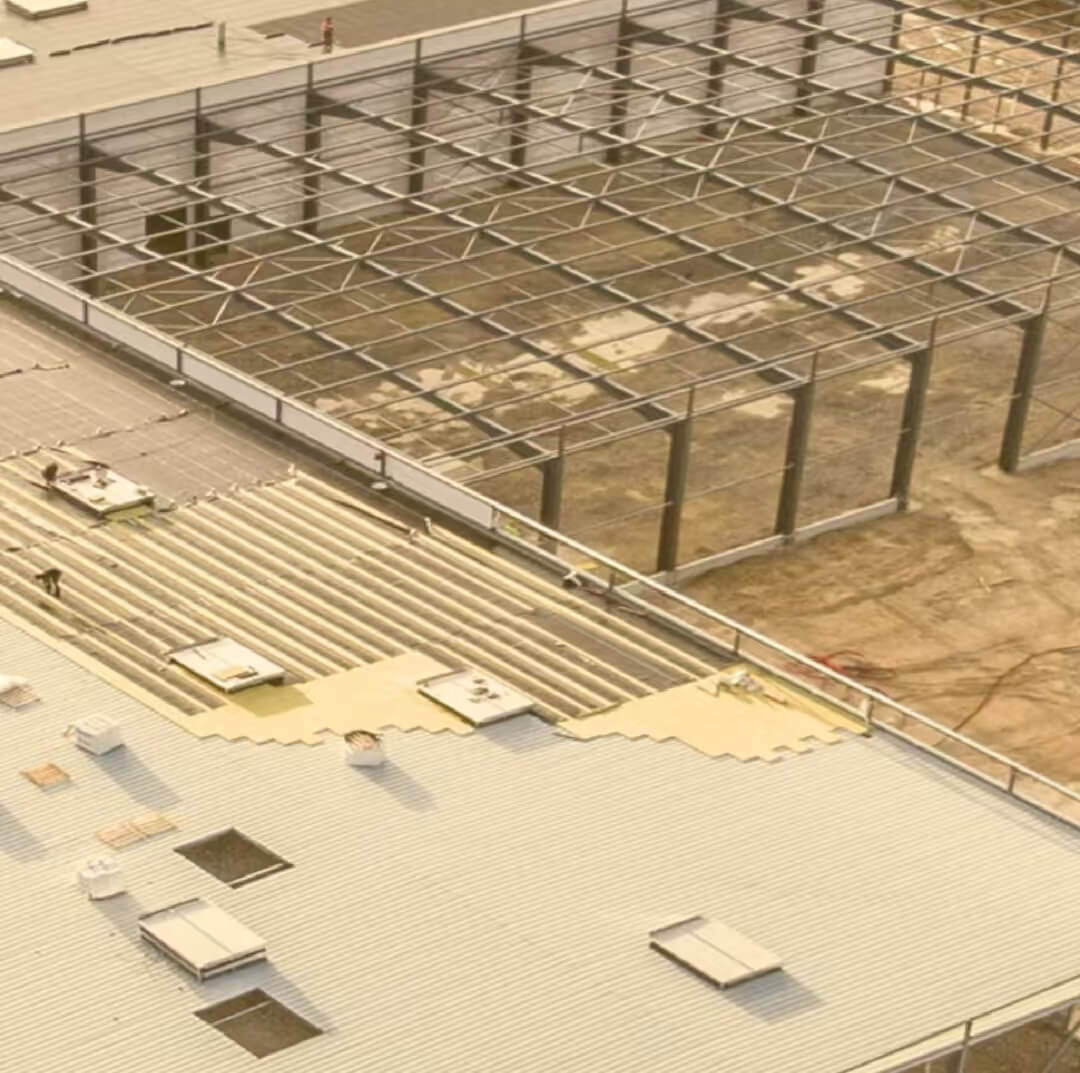
1. What is Rock Wool for Roof? (And why “specifications” matter first)
Q: What exactly is rock wool for roof, and how is it different from other insulation?
A: Rock wool (also called stone wool) is a fire-resistant, water-repellent, and sound-absorbing insulation material made from natural volcanic rock (basalt, diabase) melted at ~1600°C and spun into fibers. It is formed into boards or rolls specifically designed for roof applications.
Important distinction: Rock wool is different from slag wool, which uses industrial blast furnace slag as raw material. Slag wool has lower fire resistance, lower compressive strength, and poorer water repellency — not recommended for roof insulation in tropical climates. For roof applications, always specify rock wool / stone wool, not generic “mineral wool”.
For roofing, rock wool is manufactured with density, thickness, compressive strength, and thermal conductivity as the core technical parameters. A typical specification used by ASEAN engineers:
-
Density: 80–120 kg/m³ for roof insulation (lighter for non-load-bearing, heavier for industrial or walkable roofs)
-
Thermal conductivity of rock wool (λ-value) at 10°C: ≤0.040 – 0.044 W/(m·K) for density 80–120kg/m³ (EN 12667). Lower density (e.g., 60kg/m³) gives higher λ (~0.045+). Do not trust suppliers claiming 0.038 — that is PIR/PUR foam level, impossible for rock wool
-
Fire rating: A1 class (non-combustible)
-
Thickness: 50mm, 80mm, 100mm (depending on local climate and building codes)
-
Compressive strength at 10% deformation (EN 826):
-
Non-walkable roof (under membrane only): ≥40 kPa
-
Walkable / serviceable roof (maintenance access): ≥100 kPa
-
Equipment platform or parking roof: ≥150 kPa
-
Why this matters in SEA: Without proper density and compressive strength, rain pooling or maintenance foot traffic will crush the board, reducing R-value. Always ask your supplier for a technical datasheet before price negotiation.
2. What are the key advantages of rock wool for roof in tropical climates?
Q: Why choose rock wool over cheaper alternatives like fiberglass or foam?
A: Rock wool offers 5 distinct advantages for Southeast Asian conditions:
| Advantage | Explanation |
|---|---|
| Fire safety (A1 non-combustible) | Unlike polystyrene (EPS/XPS) that melts and spreads fire, rock wool stops flames. Critical for factories, high-rises, and warehouses in countries like Thailand and Vietnam with strict fire codes. |
| Hydrophobic (water repellent) but vapor permeable | Rock wool is treated with a silicone-based hydrophobic agent. It repels liquid water (rain, condensation drips) but allows water vapor to pass through, preventing trapped moisture. Important: Hydrophobic does not mean waterproof. Prolonged immersion (e.g., standing water for days) will eventually saturate the material. Proper roof drainage and waterproofing are still required. |
| Excellent sound absorption | Reduces rain noise on metal roofs by up to 40dB – perfect for hotels, schools, and residential pitched roofs near busy areas. |
| High temperature resistance | Withstands up to 1000°C without melting. For industrial roofs (boiler rooms, foundries), use rock wool for high temperature industrial roof supplier. |
| Dimensional stability | Does not shrink or sag over time under humidity and heat, unlike some organic foams. |
Real buyer scenario: A warehouse owner in Surabaya using cheap fiberglass saw sagging and mold after 2 rainy seasons. Switching to rock wool (density 100kg/m³, thickness 80mm) solved both insulation and durability issues.
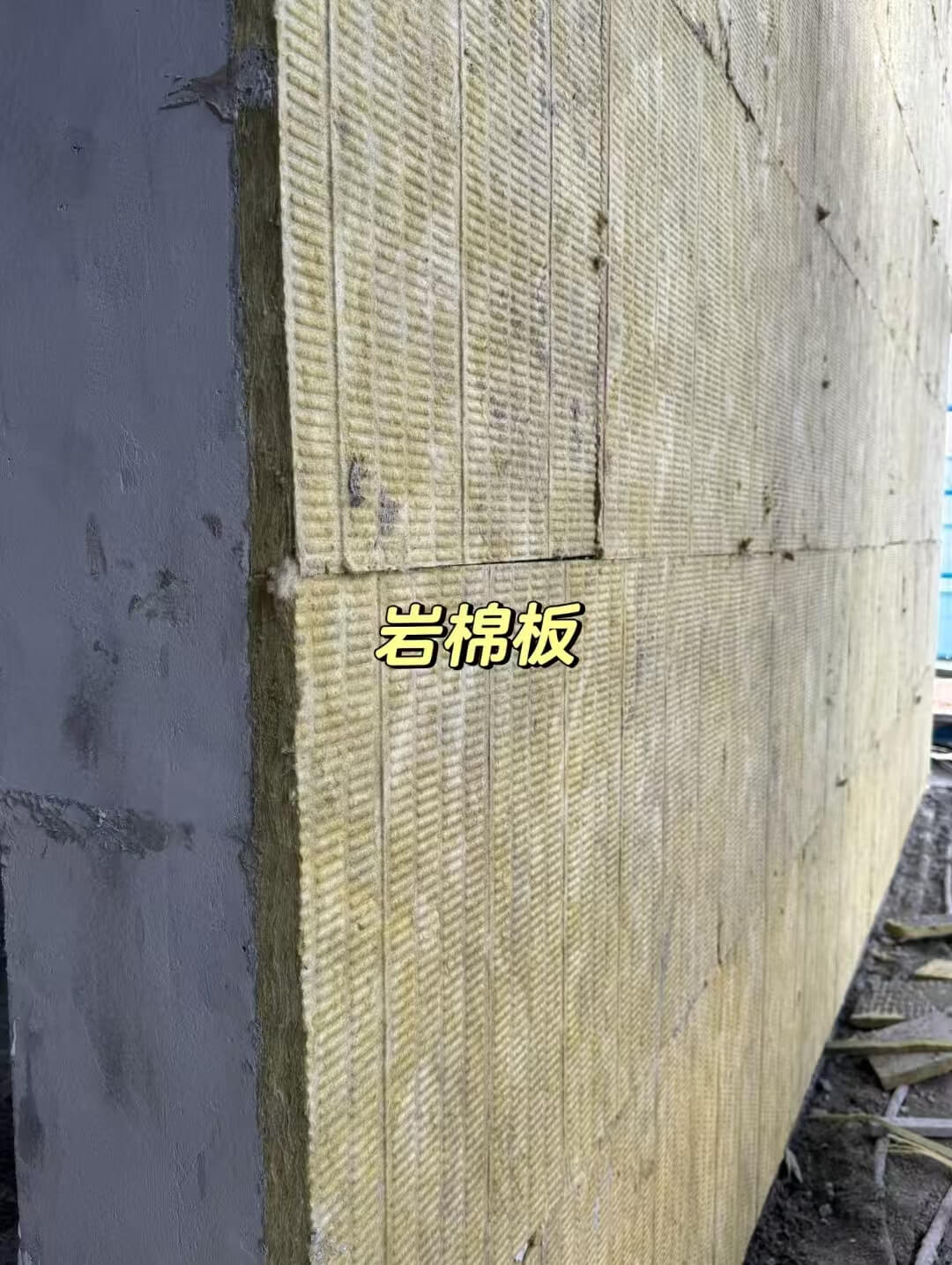
3. What are the typical application scenarios for rock wool roof insulation in SEA?
Q: Which specific roof types benefit most from rock wool?
A: Based on real ASEAN projects, here are the most common application scenarios.
3.1 Flat roof – commercial buildings
3.2 Pitched roof – villas & homes
rock wool for pitched roof insulation supplier – Balinese resorts and Malaysian bungalows use friction-fit rock wool batts between rafters. Requires non-slip edges and easy cutting.
3.3 Metal roof – thermal break
rock wool for metal roof thermal break supplier – Steel factories in Vietnam and Philippines install rock wool above the purlins or as a sandwich panel core to stop condensation (“roof sweating”) and reduce indoor heat by 5–8°C.
3.4 High-temperature industrial roof
rock wool for high temperature industrial roof supplier – Palm oil mills, rubber drying facilities, and boiler houses require rock wool with liner (aluminum foil facing) to reflect radiant heat.
Pro tip: Always match the product to the scenario. A flat roof supplier may not be suitable for pitched roofs if the board lacks flexibility.
4. How does rock wool compare to other roof insulation materials?
Q: Rock wool vs fiberglass vs PIR/PUR foam vs EPS – which is best for my roof?
A: Here’s a fact-based comparison for ASEAN buyers (considering heat, humidity, fire, and budget):
| Property | Rock Wool | Fiberglass | PIR/PUR (Polyurethane) | EPS (Expanded Polystyrene) |
|---|---|---|---|---|
| Fire rating | A1 (non-combustible) | A2/B (some treated) | B/C (melts, toxic smoke) | E (highly flammable) |
| Thermal conductivity (W/m·K) | ≤0.040-0.044 | ~0.040-0.044 | ≤0.022 (better) | ~0.035-0.038 |
| Water absorption | Hydrophobic (repels liquid) | Absorbs if wet | Closed cell (good) | Closed cell but can trap moisture |
| Compressive strength (walkable) | ≥100 kPa | Very low (20 kPa) | 100–300 kPa | 50–150 kPa |
| Sound reduction | Excellent | Moderate | Poor | Poor |
| Recycled content | 30–40% | 20–30% | Low | Low |
| Cost in SEA (USD/m², 80mm, CIF) | $3.5 – 5.5 | $3–6 | $8–15 | $2.5–5 |
| Best use case | Fire-risk roofs, metal roofs, walkable roofs | Dry, low-fire-risk attics | Cold storage, high R-value per thickness | Under slab, packaging |
Key takeaway: If your priority is fire safety + condensation control + long-term stability (typical for commercial and industrial roofs), rock wool wins despite slightly higher cost than fiberglass. For high R-value per thickness, PIR is better but riskier in fire.
5. How to select and identify high-quality rock wool for roof?
Q: What physical and visual checks can I do before buying?
A: Use this 5-step quality checklist (share with your procurement team):
-
Check the technical datasheet against these minimums:
-
Density tolerance: ±10% of claimed value (e.g., 100kg/m³ should test 90–110)
-
Thermal conductivity: ≤0.044 W/(m·K) for tropical use (lower is better)
-
Compressive strength at 10% deformation: ≥40 kPa for non-walkable roofs, ≥100 kPa for walkable roofs
-
EN 13162: Water absorption ≤ 0.5 kg/m² (2h immersion) or volumetric water absorption <5% after 24h immersion (ASTM C1763 — correct standard for rigid porous insulation). Note: ASTM C1104 tests vapor transmission, not liquid water absorption.
-
-
Physical inspection:
-
Color & uniformity: High-quality rock wool is light brown/yellowish with uniform fiber orientation. Avoid dark gray or black (excess slag or poor raw material).
-
No dusting: Rub the board – cheap grades shed fine particles (shot). Good product holds together.
-
Water repellency test: Drop water on surface – it should bead and roll off, not absorb within 5 minutes.
-
-
Ask for third-party test reports: Look for SGS, TÜV, or ISO 9001 certifications. For fire safety, demand EN 13501-1 A1 classification (non-combustible, no contribution to fire). ASTM E136 tests non-combustible performance but does NOT produce A1, A2, B,etc. classification — A1 exists only under EN standards. For ASEAN projects referencing international codes, either EN A1 or ASTM E136 passing is acceptable, but clearly state which standard applies.
-
Sample order: order 10–20m² first, test on a small roof section.
-
Binder information: Almost all rock wool uses phenolic resin (phenol-formaldehyde) as binder. This is standard and safe after curing — cured resin does not emit hazardous formaldehyde under normal use temperatures (≤200°C). Low-emission / bio-based binders (e.g., ECOSE® technology) are premium options with reduced odor and VOC, but standard phenolic resin is fully compliant with EU CE and US EPA requirements. Do not avoid standard rock wool due to “formaldehyde” fears — that would be misleading.
Red flags: No datasheet, refusal to provide samples, “generic” certification, price below $3/m² for 80mm thickness (likely fake or recycled waste).
6. How to evaluate and test rock wool on-site (simple methods)?
Q: I don’t have a lab. How can I test quality on site?
A: Here are 4 practical field tests for contractors and facility managers:
| Test | Method | Acceptable result |
|---|---|---|
| Density check | Cut a 10cm x 10cm x thickness sample, weigh on digital scale, calculate kg/m³ = weight(kg) / (0.1*0.1*thickness(m)) | Within ±10% of spec |
| Water repellency | Place a 50ml water droplet on surface; check after 30 minutes | No absorption; water rolls off |
| Compressive resistance | Put a 20kg weight on a 10cm x 10cm piece (≈20kPa pressure); measure thickness change after 1 hour | Deformation <5% (for ≥100kPa grade) |
| Smoke test (fire) | Take a small piece, apply lighter flame for 10 seconds | No flame, no melting, no dripping, only slight glowing (do in safe area) |
Important: For official acceptance, send random samples to a local lab (e.g., SGS Thailand, TÜV Vietnam) for thermal conductivity and fire testing. Cost is low ($200-500) but can save you from replacing 10,000m² of failed insulation.
7. Supply chain, logistics, and packaging – what ASEAN buyers must know
Q: How should rock wool be packed and shipped in tropical humidity?
A: Poor packaging ruins rock wool before installation. Here’s the supplier specification you should demand:
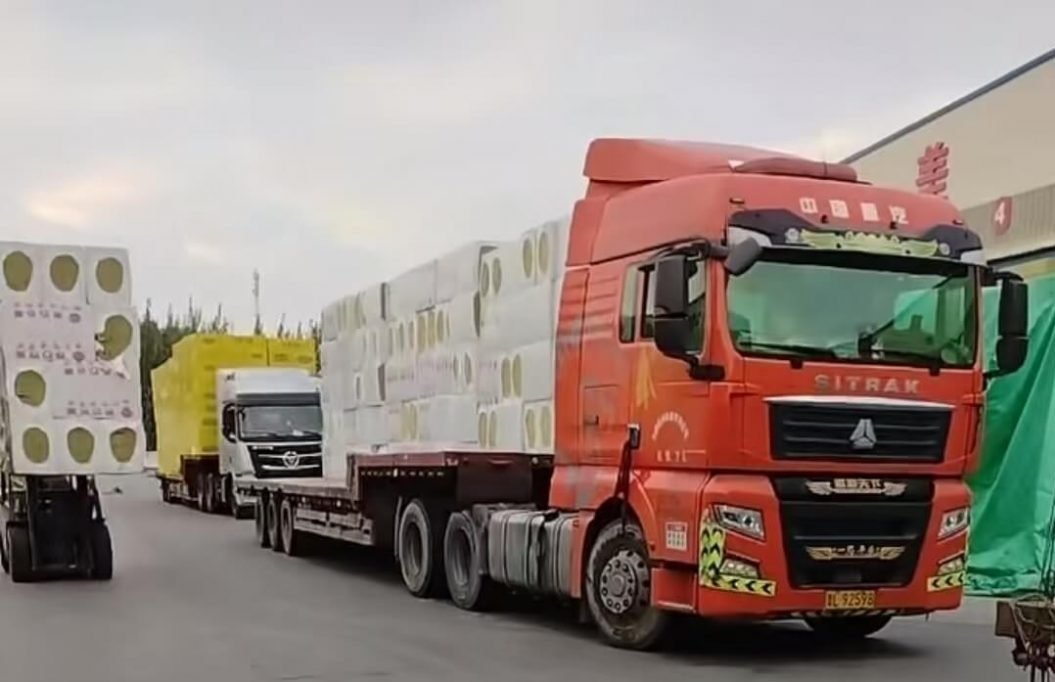
Packaging standards:
-
Shrink-wrapped plastic (minimum 150 micron) with desiccant packs inside
-
Palletized on heat-treated wooden pallets (ISPM15 for export)
-
Edge protectors to prevent crushing
-
Labeling with product name, density, thickness, batch number, and installation direction
Logistics considerations for SEA:
-
Lead time: Local suppliers (Thailand, Malaysia, Vietnam) → 3-7 days; Chinese suppliers → 14-21 days sea freight (Port of Tanjung Pelepas, Laem Chabang, Manila).
-
Moisture risk: Sea containers experience condensation. Insist on ventilated containers or additional moisture barrier.
-
Minimum order quantity (MOQ): Many suppliers require 1 pallet (~5-7m³ or ~150-200m² for 80mm thickness).
-
Delivery cost:
rock wool for roof price list per m² with delivery cost– always ask for DDP (Delivered Duty Paid) quote to your site. Hidden port charges in Indonesia or Philippines can add 15-20%.
8. How to install rock wool on a roof and key precautions (with waste estimation)
Q: What are the correct installation steps and common mistakes?
A: Follow this 8-step professional installation guide for flat and pitched roofs (metal or concrete):
Tools required:
-
Sharp utility knife (with snap-off blades)
-
Straight edge / T-square
-
PPE: N95 mask, gloves, safety glasses, long sleeves
-
Fasteners: mechanical clips + washers for flat roofs; friction-fit or staples for pitched roofs
Step-by-step:
-
Inspect roof deck – clean, dry, free of protrusions. Repair any leaks first.
-
Measure and cut – cut rock wool boards 5-10mm wider than cavity for friction fit.
-
Install vapor barrier (if required) – for high-humidity areas (e.g., coastal Thailand), add a polyethylene film on the warm side.
-
Lay boards – staggered joints (brick pattern) to avoid thermal bridging.
-
Mechanical fastening (flat roof) – use telescopic fasteners with plastic washers, minimum 2 per board (4 for high-wind areas).
-
For metal roofs – place rock wool between purlins, support with wire mesh or metal liner tray.
-
Cover with waterproof membrane – for flat roofs, install EPDM or PVC membrane over rock wool with separation layer.
-
Inspect before closing – no gaps, no compression, no moisture.
Important — match fastening to compressive strength:
-
For non-walkable roofs (40–70 kPa) : Use telescopic fasteners with larger washers (≥50mm diameter) to distribute load.
-
For walkable roofs (≥100 kPa) : Standard 45mm washers are sufficient. No additional stepping protection required.
-
Do not use adhesive-only installation on walkable roofs — adhesive will not prevent crushing under foot traffic.
Critical precautions in SEA climate:
-
Do not install during rain – rock wool is hydrophobic but prolonged wetting (days) can still reduce R-value.
-
Avoid compressing the board – compression increases thermal conductivity (loses insulation).
-
Wear full PPE – fibers irritate skin and lungs. Provide onsite safety training.
-
Acclimatization – store rock wool in dry, covered area for 48 hours before installation to stabilize moisture content.
Waste estimation example:
For a 1000m² flat roof with penetrations (vents, pipes), request waste factor of 8-10%. A good supplier provides a cutting plan to optimize yield.
9. Frequently Asked Questions (FAQs) from ASEAN buyers
Q1: Is rock wool safe for human contact?
A: Yes, once installed and covered. During installation, fibers are irritants. Modern rock wool (since 2000) is classified as not carcinogenic (IARC Group 3). Use proper PPE.
Q2: Can rock wool get moldy in high humidity?
A: No. Rock wool is inorganic – mold cannot grow on it. However, dust or organic debris on the surface can support mold. Keep it clean and dry.
Q3: What thickness should I use in Singapore (tropical climate)?
A: For energy savings: 80mm (R-value ≈1.8-2.0) for metal roofs; 100mm for flat concrete roofs with air conditioning below. Check local building codes (BCA Green Mark recommends ≥R-1.5 for roofs).
Q4: How long does rock wool last on a roof?
A: Properly installed and protected from mechanical damage, rock wool lasts 50+ years – same as building life. No degradation in R-value over time.
Q5: Do I need a certified supplier for government projects?
A: Yes. For public tenders in Malaysia, Indonesia, Philippines, demand SIRIM, SNI, or PSB certification. Also request factory audit reports.
Q6: Can I get a sample before ordering bulk?
A: Absolutely. Reputable suppliers will send A4-sized samples with datasheet.
10. Conclusion & Clear Call to Action (CTA)
You have now learned:
-
What rock wool for roof is – and why specifications like density 80-120kg/m³, A1 fire rating, and compressive strength (≥40 kPa non-walkable, ≥100 kPa walkable) are non-negotiable.
-
Where to use it – flat, pitched, metal, or industrial roofs across SEA (green roofs excluded).
-
How to differentiate high-quality from cheap rock wool using visual and simple field tests.
-
How to manage supply chain, packaging, and installation with proper waste estimation.
-
What to ask your supplier – from technical datasheets to fast shipping terms.
[Get Your Free Quotation & Installation Guide Now]
For urgent projects: WhatsApp +86 186 68998256 – mention “SEA roof guide” for priority response.