
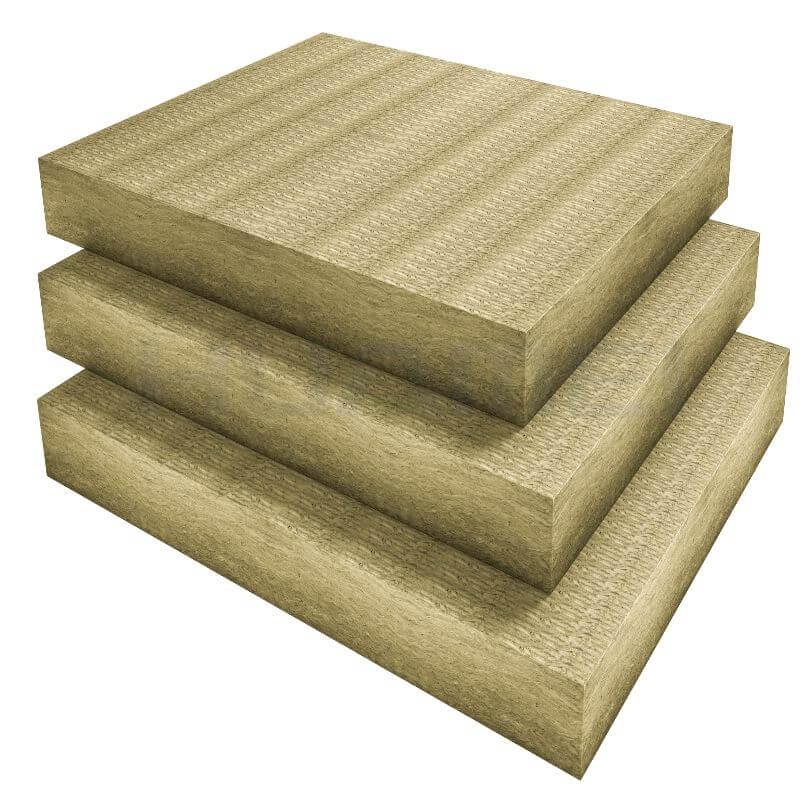
Rock Wool Board for Industrial Equipment
Standard Density: 100-180 kg/m³
Standard Thickness: 20mm-150mm
Commonly Used Specifications: 50mm, 80mm, 100mm
Standard Size: 1200mm (length) × 600mm (width)
Rock Wool Board for Industrial Equipment: Premium Insulation for Demanding Applications
When industrial facilities require reliable thermal insulation that withstands extreme temperatures, harsh conditions, and continuous operation, rock wool board for industrial equipment stands as the proven solution. From power generation plants and petrochemical refineries to manufacturing facilities and processing industries, rock wool board for industrial equipment delivers exceptional performance where ordinary insulation materials fall short. Selecting the right rock wool board for industrial equipment is essential for optimizing energy efficiency, ensuring fire safety, and maintaining long-term operational reliability.
Everinsulation manufactures premium rock wool board for industrial equipment, combining advanced production technology with rigorous quality control. This comprehensive guide explores everything specifiers, engineers, and facility managers need to know about selecting and utilizing rock wool board for industrial equipment for their most demanding applications.
What Is Rock Wool Board for Industrial Equipment?
Rock wool board for industrial equipment is a high-density mineral wool insulation product manufactured from natural volcanic rock, primarily basalt, combined with recycled slag. The raw materials are melted at approximately 1,600°C and spun into fine fibers, which are then compressed and formed into rigid boards with precise dimensions and consistent density. This manufacturing process ensures that every rock wool board for industrial equipment delivers uniform thermal performance and mechanical strength.
What distinguishes rock wool board for industrial equipment from general-purpose insulation is its enhanced mechanical strength, superior thermal stability, and ability to withstand extreme operating conditions. Unlike standard building insulation, rock wool board for industrial equipment is engineered to perform in environments where temperatures exceed 750°C, where mechanical loads are constant, and where long-term reliability is non-negotiable.
Key characteristics of rock wool board for industrial equipment include:
-
High density (typically 100–200 kg/m³) for superior mechanical strength
-
Excellent thermal stability under continuous high-temperature operation
-
Outstanding compressive and tensile strength for vertical and overhead installations
-
Chemical resistance suitable for harsh industrial environments
These properties make rock wool board for industrial equipment the preferred choice for industrial thermal insulation applications worldwide.
Why Industrial Equipment Requires Rock Wool Board for Industrial Equipment
1. Superior High-Temperature Performance
Industrial equipment such as boilers, steam pipes, reactors, and heat treatment furnaces often operate at temperatures reaching hundreds or even thousands of degrees Celsius. Conventional insulation materials may shrink, degrade, or even combust under these conditions. Rock wool board for industrial equipment withstands continuous operating temperatures up to 750°C–1,000°C without structural degradation or loss of insulating properties. For facilities operating high-temperature equipment, rock wool board for industrial equipment provides the thermal stability that other insulation materials cannot match.
2. Non-Combustible Fire Safety
Fire risk is a critical concern in industrial environments. Rock wool board for industrial equipment achieves the highest fire safety classifications (Euroclass A1), meaning it is completely non-combustible. When you specify rock wool board for industrial equipment, you are choosing a material that does not contribute to fire development, produces no smoke or flaming droplets, and acts as an effective fire barrier. This fire-resistant characteristic makes rock wool board for industrial equipment essential for facilities where fire safety is paramount.
3. Low Thermal Conductivity for Energy Efficiency
With thermal conductivity values typically ranging from 0.035 to 0.045 W/mK, rock wool board for industrial equipment significantly reduces heat loss from industrial systems. For continuously operating equipment, this translates to substantial energy savings. A high-temperature steam line insulated with rock wool board for industrial equipment can achieve annual energy savings of 20%–30%, delivering rapid return on investment. The superior thermal efficiency of rock wool board for industrial equipment directly impacts operational costs.
4. Acoustic Noise Reduction
Industrial equipment generates significant noise that can affect working conditions and environmental compliance. The dense fibrous structure of rock wool board for industrial equipment effectively absorbs and attenuates noise. Installing rock wool board for industrial equipment around noisy equipment improves workplace conditions and helps facilities meet noise emission regulations.
5. Chemical Stability and Corrosion Resistance
Industrial environments often contain corrosive elements such as acidic gases, oils, and moisture. Rock wool board for industrial equipment is inorganic, non-hygroscopic, and does not promote corrosion of metal substrates. By choosing rock wool board for industrial equipment, facility managers ensure that insulation maintains its performance properties over decades of service, reducing maintenance and replacement costs.
6. Ease of Installation and Adaptability
Rock wool board for industrial equipment can be cut, shaped, and layered to accommodate complex geometries including pipes, valves, tanks, heat exchangers, and fans. The rigid board structure of rock wool board for industrial equipment maintains its form during installation, ensuring consistent coverage and long-term performance even on vertical or overhead surfaces
Rock Wool Board for Industrial Equipment Products Specification
| Item | Parameter Details |
|---|---|
| Density | 100kg/m³, 120kg/m³, 150kg/m³, 180kg/m³ (customizable 80–200kg/m³) |
| Thickness | 50mm, 60mm, 80mm, 100mm, 120mm (customizable 20–150mm) |
| Standard Size | 1200mm×600mm, 1000mm×600mm (custom size available) |
| Surface Treatment | Plain (unfaced), Aluminum foil facing |
| Fire Rating | Class A non-combustible |
| Thermal Conductivity | ≤0.040 W/(m·K) (25℃) |
| Hydrophobic Rate | ≥99% |
| Certifications | CE, EN13162, SGS, ISO9001 |
Standard Specification
| PRODUCT | MB 40 | MB 50 | MB 60 | MB 80 | MB 100 | MB 120 |
| Density,kg/m3 | 40 | 50 | 60 | 80 | 100 | 120 |
| Thickness,mm | 50~150 | 40~150 | 40~250 | 25~250 | 25~200 | 25~150 |
| Length*widt,mm | 1200 x 600 | |||||
Main Performance and Technical Indicators
| Performance | MB 40 | MB 50 | MB60 | MB 80 | MB100 | MB120 | Unit | Standard |
| Thermal conductivity
( 25 ℃) |
≤0. 037 | W/(m •K) | GB/T 10295 | |||||
| Combustion performance | A1 | — | GB 8624 | |||||
| Melting Temperature | ≥1000 | ℃ | —- | |||||
| Surface Burning Properties | Smoke Spread < 25 , Flame Spread < 25 | — | ASTM E84 | |||||
| Acidity coefficient | ≥1.8 | — | GB/T 5480 | |||||
| Hydrophobicity | ≥99 | % | GB/T 10299 | |||||
| Mass moisture absorption rate | ≤0.5 | % | GB/T 5480 | |||||
| Short-term water absorption (partial immersion, 24h) | ≤0.2 | kg/m² | GB/T 30805 | |||||
| Dimensional stability | ≤0.5 | % | GB/T 30806 | |||||
| Corrosive | no corrosion | — | ASTM C665 | |||||
| Formaldehyde emission | ≤0.5 | mg/(kg•h) | GB/T 32379 | |||||
| Noise Reduction Coefficient | ≥0.80 | — | GB/T 18696 | |||||
Key Applications of Rock Wool Board for Industrial Equipment
1. Boilers and Combustion Equipment
Boiler casings, combustion chambers, and heat recovery units require high-density rock wool board for industrial equipment for multi-layer insulation systems. Proper insulation using rock wool board for industrial equipment reduces external surface temperatures, minimizes heat loss, and protects personnel from burn risks.
2. Steam Pipes and Thermal Distribution Networks
Industrial steam piping operates at high temperatures over extended periods. Rock wool board for industrial equipment is commonly used in pipe insulation applications, available as pre-formed pipe sections or as board materials for custom fabrication. Using rock wool board for industrial equipment for steam lines ensures consistent thermal performance and energy efficiency.
3. Petrochemical and Refinery Equipment
Reactors, towers, heat exchangers, and storage tanks in refineries and chemical plants operate under high temperatures and corrosive conditions. Rock wool board for industrial equipment provides the thermal stability and chemical resistance required for these demanding applications. Refineries worldwide rely on rock wool board for industrial equipment for critical insulation needs.
4. Power Generation Facilities
Coal-fired, biomass, and waste-to-energy power plants rely on rock wool board for industrial equipment for insulating boilers, turbines, flue gas ducts, and emissions control equipment. The fire resistance and thermal stability of rock wool board for industrial equipment are essential for safe, efficient plant operation.
5. Heat Treatment and Industrial Furnaces
Heat treatment furnaces, drying kilns, ceramic kilns, and glass melting furnaces require insulation with exceptional thermal stability. Rock wool board for industrial equipment serves as a reliable furnace lining material, reducing heat loss and improving temperature uniformity.
6. HVAC and Industrial Ventilation Systems
Large-scale industrial HVAC systems, air handling units, and ventilation ductwork benefit from rock wool board for industrial equipment for both thermal insulation and acoustic treatment, improving system efficiency and reducing operational noise.
How to Select the Right Rock Wool Board for Industrial Equipment
1. Determine Operating Temperature Requirements
The maximum continuous operating temperature of the equipment is the primary selection criterion. Everinsulation offers rock wool board for industrial equipment in multiple temperature grades to match specific application requirements. Selecting the correct temperature grade ensures that rock wool board for industrial equipment performs reliably throughout its service life.
2. Assess Mechanical Load Conditions
For vertical equipment, vibrating machinery, or areas subject to maintenance traffic, higher-density rock wool board for industrial equipment provides the mechanical strength needed to maintain insulation integrity over time. Denser rock wool board for industrial equipment offers superior resistance to compression and impact.
3. Consider Environmental Factors
For installations exposed to moisture, outdoor conditions, or corrosive environments, select rock wool board for industrial equipment with enhanced water repellency or specify appropriate weather barriers and jacketing systems to protect the rock wool board for industrial equipment.
4. Match Product Form to Installation Method
Rock wool board for industrial equipment is available as flat boards, pipe sections, and custom-fabricated shapes. Everinsulation can provide pre-fabricated components to minimize on-site cutting and installation time for rock wool board for industrial equipment.
5. Verify Certifications and Standards Compliance
For export projects, confirm that rock wool board for industrial equipment meets applicable regional standards, such as CE marking for European markets, ASTM compliance for North America, or classification society approvals for marine applications.
Frequently Asked Questions
What is the maximum operating temperature for rock wool board for industrial equipment?
Everinsulation rock wool board for industrial equipment is rated for continuous operation up to 750°C, with specialized formulations available for applications up to 1,000°C. Selection should be based on actual equipment operating conditions to ensure the rock wool board for industrial equipment performs optimally.
Is rock wool board for industrial equipment fire-resistant?
Yes, rock wool board for industrial equipment is non-combustible and achieves Euroclass A1 fire rating. Rock wool board for industrial equipment does not burn, produce smoke, or contribute to flame spread, making it the safest choice for fire-critical industrial applications.
Does rock wool board for industrial equipment absorb moisture?
Standard rock wool board for industrial equipment is naturally water-repellent and does not wick moisture. For applications with prolonged moisture exposure, Everinsulation offers enhanced water-repellent treatments for rock wool board for industrial equipment.
How long does rock wool board for industrial equipment last?
Rock wool board for industrial equipment is an inorganic material that does not degrade over time. When properly installed and protected with appropriate jacketing, rock wool board for industrial equipment maintains its thermal and mechanical properties for the operational lifetime of the equipment.
Can rock wool board for industrial equipment be custom fabricated?
Yes, Everinsulation provides custom fabrication services for rock wool board for industrial equipment, including pre-cut shapes, pipe sections, valve covers, and flange insulation components to reduce on-site installation work.
Everinsulation is committed to providing premium rock wool board for industrial equipment backed by advanced manufacturing, rigorous quality control, and dedicated technical support. Whether you are specifying insulation for a new facility, upgrading existing systems, or sourcing for distribution, Everinsulation delivers the quality and reliability your projects demand with every rock wool board for industrial equipment order.