
1. What Is 75mm Glass Wool Insulation and Why Does Thickness Matter?
Q: What exactly is 75mm glass wool insulation?
A: 75mm glass wool insulation is a fibrous thermal and acoustic insulation material made from molten glass spun into flexible fibers, then compressed into rolls or boards. The “75mm” refers to its nominal thickness—a critical dimension for tropical and industrial applications across Southeast Asia.
Q: Why is the 75mm thickness specifically important?
A: In Southeast Asian climates, where ambient temperatures often exceed 35°C and HVAC systems run continuously, 75mm provides a balanced trade-off between thermal resistance (R-value) and physical space. Many regional building codes now specify 75mm glass wool insulation thickness specification for ductwork in commercial towers in Bangkok, Jakarta, and Manila. Compared to 50mm, 75mm significantly reduces heat gain through metal roofs and air conditioning ducts; compared to 100mm, it fits into tighter ceiling plenums common in Southeast Asian high-rises.
2. Key Advantages of 75mm Glass Wool Over Other Materials
Q: What makes 75mm glass wool better than PIR or rock wool for Southeast Asia?
A: Three clear advantages stand out.
First: Cost-effectiveness. For price-sensitive Southeast Asian markets including Vietnam, Indonesia and the Philippines, the resin binder ratio directly affects the overall cost and performance of 75mm glass wool insulation. Premium grades adopt an optimized resin content of 4–7% to strike an ideal balance between cost, structural strength and thermal efficiency. By comparison, PIR panels can be 2–3 times more expensive per square meter.
Second: Acoustic performance.Southeast Asian buildings face noise from motorbike traffic, karaoke bars, and monsoon rains. Glass wool’s open fiber structure absorbs sound better than closed-cell foams. For metal roof applications, 75mm glass wool insulation for metal roof and wall insulation reduces rain drumming noise by up to 65%.
Third: Fire safety.Unlike expanded polystyrene (EPS), glass wool is naturally non-combustible. When buyers request 75mm glass wool insulation fire rating Class A1 datasheet, manufacturers can provide international certifications. Rock wool offers similar fire resistance but is heavier and more expensive to ship across ASEAN—shipping costs from China or Malaysia to Indonesia or Thailand favor glass wool.
Q: How does 75mm glass wool compare to reflective foil insulation?
A: Reflective foil works only with an air gap and loses effectiveness when dusty—a major drawback in Southeast Asia’s urban construction sites. Glass wool performs regardless of dust accumulation, making it more reliable for long-term applications like 75mm glass wool for rectangular ductwork in office buildings.
3. Applicable Scenarios: Where to Use in Southeast Asia
Q: Which industries and projects need 75mm glass wool most urgently?
A: Based on current procurement patterns across ASEAN, these six scenarios dominate:
Scenario 1: HVAC ductwork in commercial buildings
Office towers in Singapore, Kuala Lumpur, and Ho Chi Minh City routinely specify 75mm glass wool for rectangular ductwork to meet energy codes. The thickness prevents condensation dripping onto false ceilings—a common complaint from building owners.
Scenario 2: Industrial pipe wrapping
Factories in Thailand’s Eastern Economic Corridor use 75mm glass wool for industrial pipe wrapping for steam lines and chilled water pipes. The 75mm layer keeps chilled water at 7°C without external sweating, and steam at 150°C with minimal heat loss.
Scenario 3: Metal roof insulation
Warehouses in Indonesia’s Jababeka Industrial Estate and Vietnam’s Dinh Vu Industrial Zone install 75mm glass wool under metal roofs. It cuts cooling energy by 30–40% and stops condensation dripping onto goods.
Scenario 4: Power plant boiler rooms
In Cilegon, Indonesia, and Pagbilao, Philippines, 75mm glass wool for power plant boiler room applications withstands surface temperatures up to 250°C while protecting workers from burns.
Scenario 6: Partition walls in hotels and hospitals
Guest rooms in Phuket and hospitals in Manila use 75mm glass wool to achieve 2-hour fire ratings and sound transmission class (STC) values above 50.
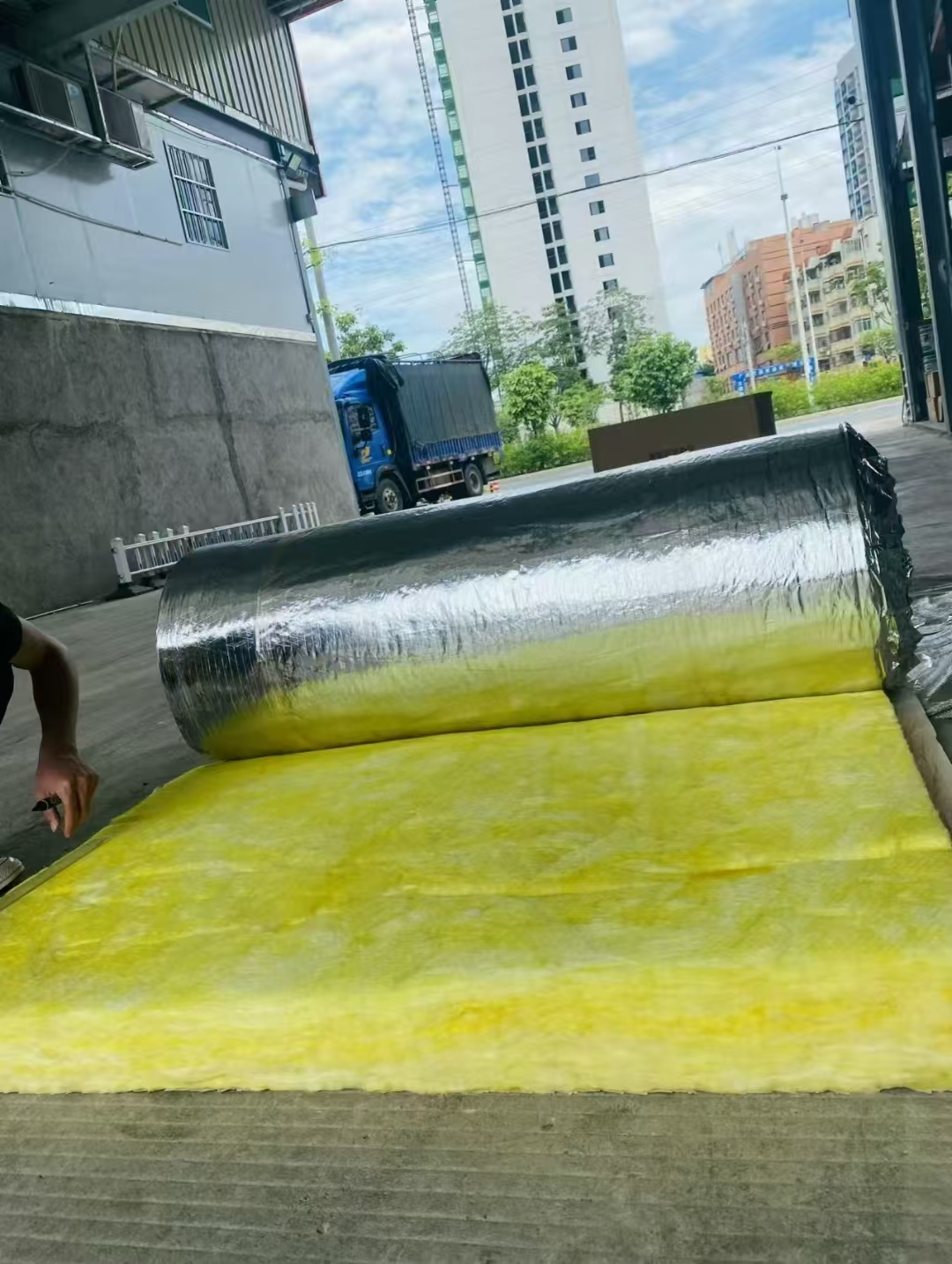
4. How to Identify High-Quality 75mm Glass Wool Products
Q: What physical tests can I perform on site or at the supplier’s warehouse?
A: Smart buyers in Southeast Asia use five simple checks:
Check 1: Thickness recovery
Ask for a compression test. Squeeze a sample by hand—it should quickly return to full 75mm thickness within seconds. Low-quality products show 75mm glass wool recovery thickness after compression of less than 90% of original height.
Check 2: Density consistency
Reputable 75mm glass wool insulation density kg/m3 for HVAC falls between 24 and 48 kg/m³ depending on application. Ductwork insulation: 48 kg/m³; pipe wrapping insulation: 48–56 kg/m³. Uneven density indicates poor manufacturing.
Check 3: Fire test
Request a small flame test (in a safe environment). Genuine glass wool will not propagate flame or emit black smoke. Always ask for the 75mm glass wool insulation fire rating Class A1 datasheet from an accredited lab like SGS or TÜV.
Check 4: Facing quality
For foil-faced products, check the vapor barrier’s tensile strength. Scratch the foil—cheap facings flake off. Quality 75mm glass wool with foil facing vapor barrier has a peel strength exceeding 1.5 N/cm and resists tearing during installation.
Check 5: Dust level
Rub a sample between gloved hands. Excessive dust indicates poor binding resin distribution or fiber breakage. Installer safety is a real concern; ask specifically for low-dust products claiming 75mm glass wool low dust formula for installer safety certification.
5. How to Evaluate and Field-Test 75mm Glass Wool
Q: What performance tests should I run before full-scale purchase?
A: Conduct these three practical evaluations:
Thermal test (simple method)
Place a 75mm sample over a 100W incandescent lamp. After 10 minutes, the top surface should remain cool to touch. If it gets hot, thermal conductivity is too high—reject the batch.
Water absorption test
Weigh a dry sample, submerge it in water for 24 hours, then re-weigh. Premium glass wool: Water absorption ≤1% by weight. High absorption leads to mold growth in humid Southeast Asian buildings.
Vertical sag test
Mount a sample vertically inside a 60°C oven for 48 hours. Measure for 75mm glass wool vertical application sagging resistance. Sag deflection shall not exceed 1% of the overall length. Poor sag resistance causes roof insulation to slump over time, creating thermal bridges.
Q: How do I verify the R-value claimed by suppliers?
A: R-value varies with density and fiber diameter.For 75mm insulation at 32 kg/m³ density with thermal conductivity of 0.031–0.043 W/(m·K), the thermal resistance ranges from RSI 1.74 to 2.42 (metric) and R-9.90 to R-13.74 (imperial).Ask for the manufacturer’s 75mm glass wool R-value chart for energy code compliance. If a supplier claims R-3.0 for 75mm without testing evidence, be skeptical—that’s likely a 100mm product mislabeled.
6. Supply Chain, Logistics, and Packaging Considerations for ASEAN
Q: How should 75mm glass wool be packed for ocean freight to Southeast Asia?
A: Proper packaging prevents compression damage and moisture ingress. Reputable suppliers use:
– Vacuum compressed rolls (compressed to 15–20% of original volume) for container efficiency
– HDPE or woven polypropylene bags with inner moisture barriers
– Wooden pallets wrapped in stretch film and strapped
– Clear labeling with “DO NOT DOUBLE STACK” warnings
Q: What container capacity should I plan for?
A: A 40-foot high cube container typically holds:
– 400–480 rolls of 50mm x 1.2m x 6m (depending on density)
Before finalizing price negotiations, buyers should check how resin content impacts the cost and quality of 75mm glass wool insulation. A lower resin proportion cuts material costs, yet it may lead to higher dust emission and weaker mechanical durability.
Q: Which Southeast Asian ports have the best import handling for insulation?
A: Port Klang (Malaysia), Tanjung Priok (Jakarta), Laem Chabang (Thailand), and Cái Mép (Vietnam) handle glass wool efficiently. Avoid minor ports where long customs delays can expose compressed rolls to humidity, permanently damaging recovery thickness.
Q: How does humidity affect 75mm glass wool during storage?
A: Glass wool itself does not absorb moisture, but the binder and facing materials will degrade if exposed to prolonged humidity above 80% RH. It is recommended to store palletized goods indoors or fully covered with tarpaulins. Never leave compressed rolls exposed on open docks during the monsoon season; condensation trapped inside packaging will accelerate binder deterioration and shorten the long-term thermal performance of 75mm glass wool insulation..
7. Proper Installation Techniques and Critical Warnings
Q: What are the correct steps for installing 75mm glass wool duct insulation?
A: Follow this sequence for 75mm glass wool for rectangular ductwork in office buildings:
1. Check duct surface – Must be dry, clean, and free of oil.
2. Apply adhesive – Spray contact adhesive suitable for metal and glass wool.
3. Fit the insulation – Cut pieces 5mm oversize to ensure compression fit against corners.
4. Staple or pin – Use welded pins or cup-head staples at 300mm centers.
5. Seal joints – Overlap facing by 50mm and seal with aluminum tape.
6. Add secondary fixings – For vertical runs, use speed clips to prevent 75mm glass wool vertical application sagging.
7. Install vapor barrier – If not pre-faced, wrap with separate foil, ensuring all penetrations are taped.
Q: How do I install 75mm glass wool in metal roofs correctly?
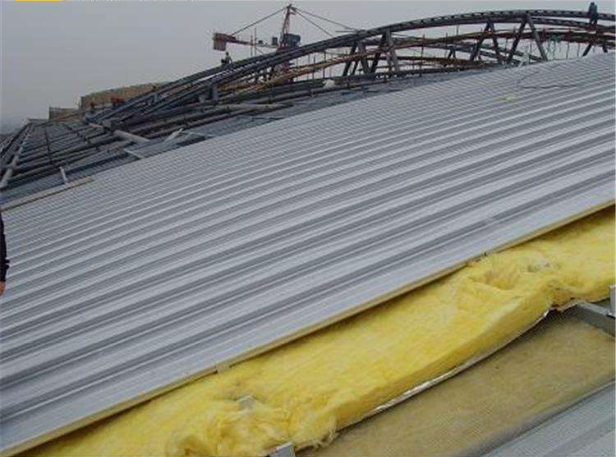
A: For 75mm glass wool for metal roof and wall insulation:
– Install before fixing the metal roof sheets.
– Lay glass wool rolls parallel to roof purlins, with side and end overlaps of minimum 150mm. Do not compress the insulation during installation.
– Critically: Do not compress the insulation under purlins—use continuous rolls over the top of purlins, then fix battens on top if needed.
– For tropical climates, specify a reflective foil facing on the underside to reject radiant heat.
Q: What are the top installation mistakes in Southeast Asia?
A: Avoid these costly errors:
Compression – Compressing 75mm into a 50mm gap reduces R-value by 30%. Never force material.
No vapor barrier on cold surfaces – On chilled water pipes at 7°C, omitting a vapor barrier guarantees condensation and mold.
Loose joints– Unsealed butt joints allow thermal bypass. Always stagger joints in multi-layer applications.
Ignoring safety– Glass wool fibers cause skin and respiratory irritation. Provide workers with gloves, masks, and long sleeves. Products labeled 75mm glass wool low dust formula for installer safety significantly reduce complaints.
8. Common Questions from Southeast Asian Purchasers
Q: Does 75mm glass wool insulation cause skin itching? How to manage it?
A: Yes, conventional glass wool may cause skin irritation due to fine airborne fibers.Low-dust and biosoluble glass wool formulations are engineered to minimize itching and respiratory discomfort, with optimized fiber structure and high biosolubility.For sensitive installers, we recommend selecting low‑dust biosoluble glass wool regardless of thickness.As standard site protection measures, workers should wear disposable coveralls, gloves and eye protection. Skin exposure should be avoided; rinse any exposed skin with cool clean water after installation..
Q: Can 75mm glass wool be used outdoors exposed to rain?
A: No. Glass wool facing is water-resistant but not waterproof. For outdoor applications like exposed roof insulation, you must clad it with metal sheeting or use a closed-cell foam instead. For covered outdoor pipework, 75mm glass wool for industrial pipe wrapping 75mm combined with aluminum cladding works well.
Q: What is the lifespan of 75mm glass wool in tropical conditions?
A: Properly installed with proper vapor barriers, premium glass wool can serve 30 to 50 years. However, high temperature over 70°C combined with extreme humidity will speed up binder aging and weaken the long-term thermal stability of 75mm glass wool insulation. For installations in boiler rooms or around steam pipelines, routine inspection every 5–7 years is recommended to check for binder embrittlement, where the material becomes crumbly under slight pressure..
Q: How does 75mm compare to 50mm for energy savings payback?
A: In ASEAN’s cooling-dominated tropical climate, upgrading from 50mm to 75mm glass wool usually raises material costs by 20–30%, yet cuts air conditioning energy consumption by 15–20%. The payback period averages 1–3 years for commercial HVAC duct insulation, and 2–4 years for industrial metal roof insulation. For cold storage plant auxiliary rooms, ventilation ducts and ceiling insulation—where glass wool is fully applicable—the thicker grade lowers compressor and fan operating hours, with investment typically recovered in less than 18 months.
Q: Can I reuse 75mm glass wool removed from one building?
A: Though technically feasible, reusing compressed glass wool is not practically advisable. It may lose rebound capability permanently with fiber damage, and faced grades tend to collect dirt and develop mold. For hygiene and stable performance, always install brand-new material. Reclaimed glass wool is limited to loose fill in hidden cavities only, and must not be used for ductwork or breathing zone areas.
Q: What is the minimum order quantity for factory-direct 75mm glass wool from China to Southeast Asia?
A: We provide customized foil facing and modified resin formulations with flexible order quantities, supporting both small-batch and half-container shipments. However, many regional distributors in Malaysia, Thailand, and Vietnam hold stock and sell by the roll—but at 30–50% higher price. For large industrial buyers, direct container orders with 75mm glass wool price vs binding resin content negotiation make economic sense.
Q: How do I handle customs classification for 75mm glass wool in ASEAN?
A: HS code is typically 7019.39 (glass wool or articles thereof). Some countries require additional permits for materials containing formaldehyde-based binders. Specify “phenol-formaldehyde resin content <5%” on commercial invoices to avoid restrictive chemical import regulations in Singapore and Thailand.
9. Conclusion & Action Plan for Southeast Asian Buyers
Summary of critical decision factors:
| Decision Factor | Recommended Threshold for 75mm Glass Wool |
|---|---|
| Density (ductwork) | 32–40 kg/m³ |
| Density (pipe) | 48–64 kg/m³ |
| Recovery thickness | ≥90% after compression |
| Water absorption | <1% by weight |
| Sag (vertical, 60°C) | <5% over 48 hours |
| Fire rating | Class A1 (EN 13501-1) or equivalent |
| Facing peel strength | >1.5 N/cm |
| Thermal conductivity | ≤0.034 W/m·K at 20°C mean |
Your 5-step procurement checklist:
1. Define application – Ductwork, pipe, cold storage, or roof? Each requires different 75mm glass wool insulation density kg/m3 for HVAC or industrial use.
2. Request datasheets – Insist on 75mm glass wool insulation fire rating Class A1 datasheet and 75mm glass wool R-value chart for energy code compliance.
3. Perform three quick tests – Compression recovery, water absorption, and small flame test before releasing full payment.
4. Plan logistics– Specify packaging for tropical ocean freight. Request 75mm glass wool recovery thickness after compression verification upon arrival.
5. Train installers – Provide safety gear and emphasize no-compression rules. Use products with 75mm glass wool low dust formula for installer safety to reduce on-site complaints.
For large-scale projects (hotels, hospitals, industrial plants), invest in a small trial shipment of 100–200 rolls. Test on one roof or duct section. Measure actual energy savings over 3 months. Then scale confidently.
Final note: Southeast Asia’s heat and humidity punish substandard insulation mercilessly. A cheap product that sags, absorbs moisture, or fails fire tests will cost you far more in energy waste, mold remediation, and replacement labor than the upfront savings. Prioritize verifiable performance over lowest bid—your long-term operating budget will thank you.